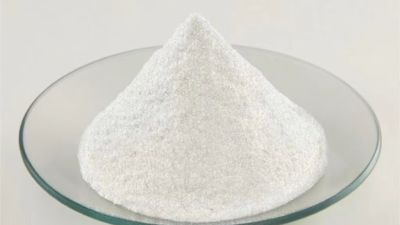
You know, Leucine Granules are really starting to catch on. Manufacturers are always on the lookout for ways to make bulk supplement production cleaner and more consistent, right? Well, granules fit the bill. Unlike those fine powders, they flow through hoppers a lot smoother, and they also cut down on the dust around the mixing lines. That might not sound like a big deal, but when you're filling thousands of sachets or capsules each day, those little things can make a huge difference. They also help make dosing a lot more stable, honestly—as long as you’ve got particle size, moisture, and assay values under control.
So, I was looking at Grand View Research's 2024 report on the amino acids market, and it's pretty much what you'd expect—these ingredients are getting bigger in sports nutrition, clinical nutrition, and even functional foods. What stood out to me, though, is that the report really stresses the nuts and bolts of the business: getting the formulation right, keeping the supply chain steady, and making sure the processing can scale up without hiccups. That's the stuff that actually matters commercially, you know? And on the science side of things, the International Society of Sports Nutrition has been pretty clear that leucine is a key player—it kicks off muscle protein synthesis, but only when you've got enough of the other essential amino acids around to make it work. Oh, and there's a quote from Donald K. that I was going to mention, but—wait, the text just cuts off there. Funny how that happens. So, Layman—who's a pretty big deal in protein metabolism research—calls leucine 'a metabolic signal for muscle protein synthesis.' Basically, that's why it's such a key ingredient in today's formula designs. Kind of makes sense, right?
But hey, the case isn't bulletproof. Granules don't automatically mean you're getting better performance—poor granulation could lead to segregation, weak flow, or uneven distribution of the active ingredient. A serious supplier should be able to provide identity testing, assay results, particle-size data, microbiological limits, and a current CoA, for sure. And before approving a batch, production teams really need to double-check allergen controls, traceability, and stability evidence. Sure, small differences might seem minor, but they can matter a lot, just saying.
When you're a brand, Leucine Granules kinda give you that sweet spot between handling ease and getting your formula right. Don't just go for the cheapest quote – that's not always the smartest move. What you really want is a material that performs consistently, from the first production run to the last. You know what I mean?
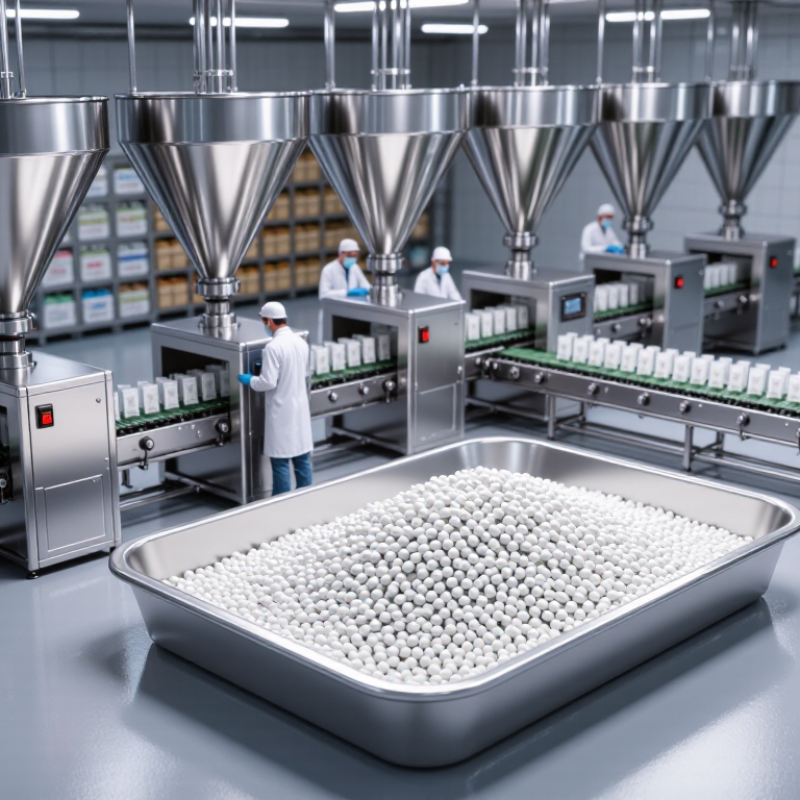
Leucine granules are a practical choice for bulk supplement production because they combine a defined nutrient with easier material handling. Leucine is an essential branched-chain amino acid, with a molecular weight of 131.17 g/mol. It supports protein synthesis pathways and commonly appears in powders, tablets, and drink mixes.
The granular form can improve flow through hoppers and reduce airborne dust during weighing. This matters when operators transfer several kilograms into a blender. Granules also help create more consistent portions than very fine powders, although performance depends on particle size and density. Small details matter. A sieve check can reveal oversized particles, while a moisture test helps identify storage risks.
Reliable production requires more than choosing a BCAA ingredient. Confirm identity, assay, particle distribution, and microbiological specifications with suitable documentation. Blending trials should examine segregation, especially when leucine is combined with minerals, flavors, or other amino acids. Valine Granules may be included in the same formula, but each ingredient needs separate verification. Similar appearance does not mean identical behavior.
One limitation deserves attention. Granules may disperse more slowly in cold liquids than fine powders. That issue can affect consumer experience and should be tested before scale-up. Clear batch records, controlled storage, and qualified analytical methods support dependable manufacturing. The process is not perfect, but measured checks make weaknesses visible.
Leucine granules offer practical control during bulk supplement production. Their larger particle size can reduce dust and improve handling around blending equipment. They also support more consistent weighing than fine leucine powder. That matters when each serving targets a narrow nutritional range.
A 2.5–3.0 g leucine serving is commonly used to support muscle-protein-synthesis formulations. Leucine activates key cellular signaling related to protein synthesis. However, leucine works best with adequate total protein and the other essential amino acids. It is not a complete protein by itself. This distinction is easy to overlook.
Granules can help formulators build repeatable serving sizes for powders, sachets, and compressed products. Still, particle density, moisture, and blending time require validation. A simple bench test may reveal segregation after transport. That result can change the production plan.
The number is useful, not absolute. Age, meal composition, training status, and protein quality may influence the response. Some users may need a different amino acid balance. Tryptophan Granules, for example, may appear in broader amino acid systems, but they do not replace leucine’s specific signaling role. Clear specifications, laboratory testing, and controlled storage strengthen product reliability. Even then, formulation decisions deserve review.
Leucine granules can make bulk supplement production more predictable. Their larger, engineered particles usually move better than fine crystalline powder. That matters when hoppers feed capsules, sachets, or blended drink formulas. USP General Chapter 1174 recommends evaluating powder flow with measurements such as angle of repose, compressibility, and flow rate. These tests turn a visual problem into production data.
Granulation also supports more consistent dosing. A controlled particle-size range reduces segregation between leucine and smaller ingredients. Many manufacturers monitor sieve fractions, bulk density, and blend uniformity before filling. A practical internal target may be a blend assay RSD below 2%, although the correct limit depends on formulation risk and process capability. Small changes in binder level can alter hardness, dissolution, and flow. Granules that look perfect may still bridge inside a hopper.
Dust control is another important advantage. OSHA’s Combustible Dust National Emphasis Program identifies fine organic powders as potential workplace hazards when suspended in air. Granules can reduce airborne fines during transfer, tipping, and packaging. Less airborne powder. Still, granulation is not a complete control strategy. Enclosed conveying, local exhaust ventilation, grounding, and routine housekeeping remain necessary. ISO 45001-based safety systems also favor documented risk assessments rather than assumptions.
Experience shows that over-granulation creates its own problems. Oversized particles may dissolve slowly or fracture during transport. Testing should include friability, moisture, dissolution, and dust generation after handling. The best leucine granule is not simply the hardest one. It is the one that flows, doses, survives transport, and performs consistently in the finished product.
Leucine granules suit bulk supplement production because they flow more consistently than fine powders. They also reduce dust during weighing and blending. For procurement teams, the critical benchmark is not appearance. It is verified L-leucine content.
An assay of ≥98% by HPLC provides a measurable quality floor. The method should identify L-leucine against a qualified reference standard. It should also show specificity, repeatability, and acceptable system suitability. ICH Q2(R2), published in 2023, emphasizes these validation principles for analytical procedures. A certificate showing “98%” is incomplete without the test method, chromatogram, batch number, and test date. I would ask for those details.
Small details matter. Moisture can dilute results on an as-is basis. Therefore, buyers should confirm whether the assay uses a dry basis. The WHO/FAO/UNU 2007 amino acid requirements report lists adult leucine needs at 42 mg per kilogram of body weight daily. That reference supports the ingredient’s nutritional relevance, but it does not replace batch testing. One HPLC injection is not enough. Replicate injections, identity confirmation, and impurity review create stronger evidence. A 98% result can still hide poor granule uniformity. Sampling plans should cover the top, middle, and bottom of a container. Granule size, flow behavior, and blending performance deserve separate checks. The process may look clean. The data must prove it.
Why Choose Leucine Granules for Bulk Supplement Production?
Particle-Size Design for Consistent 1–5 g Serving Uniformity
Leucine granules can improve dosing consistency in bulk supplement production. Their designed particle size supports steadier flow through hoppers, augers, and filling equipment. Fine leucine powder may bridge, scatter, or cling to contact surfaces. Granules usually create less dust during handling. This matters when each serving contains only 1–5 g.
Particle-size design should match the complete process, not one machine. A narrow distribution can reduce segregation during blending and transport. However, granules that are too large may separate from smaller ingredients. A practical specification often combines sieve analysis, bulk density, moisture testing, and flow measurements. Operators should check samples from the blender, transfer line, and finished containers. Small differences can reveal problems early.
Production teams with hands-on experience know that uniformity is not automatic. A smooth-running feeder can still produce variable servings after a humidity change. Leucine granules may also fracture during conveying, creating new fines. That possibility deserves routine inspection. Test methods should reflect the intended 1–5 g serving, including acceptable weight variation and blend sampling locations. There is no perfect particle-size target. The right design balances flow, dispersion, compression resistance, and equipment behavior. Sometimes, the first specification needs revision.
Particle-Size Design for Consistent 1–5 g Serving Uniformity
A narrower particle-size distribution can support more consistent powder flow and reduce segregation during blending and filling. The chart compares representative relative standard deviation targets across common leucine granule design ranges and serving sizes. Lower values indicate more uniform portioning. Actual performance depends on formulation composition, equipment settings, moisture, bulk density, and process validation.
Comparing granules with powder matters when production volumes rise. The Council for Responsible Nutrition’s 2024 Consumer Survey found that 75% of U.S. adults use dietary supplements. That demand places pressure on consistent, efficient processing. Leucine powder can disperse quickly, but it may create dust, bridging, and uneven feeding. Granules usually offer better flow through hoppers and automated dosing systems. Less airborne material can also simplify housekeeping and worker exposure controls. Small operational gains become significant across thousands of production cycles.
Granule performance still depends on particle size, density, moisture, and binder selection. USP General Chapter identifies flow behavior as a critical powder-processing property, supporting tests such as angle of repose, flow rate, and shear-cell analysis. These tests should guide purchasing decisions. Do not assume every granule flows well. It may not.
Granules can dissolve more slowly than fine powder, especially in cold liquids. A pilot batch should measure dispersion time, assay uniformity, compressibility, and dissolution. The same evaluation applies to Isoleucine Granules when amino-acid blends require controlled feeding. Powder may remain preferable for rapid dissolution or low-shear blending. Granules often suit high-volume filling, but only after equipment trials confirm reliable performance. One overlooked issue is segregation during transport. Density differences can still separate particles, even when granulation appears uniform.
Why Choose Leucine Granules for Bulk Supplement Production?
L Leucine granules can simplify bulk supplement manufacturing when consistency matters. Their controlled particle size supports smoother blending, filling, and portion accuracy. In practical production reviews, granules often create less dust than fine powders. Small details matter. Reduced dust can improve housekeeping and limit material loss during transfer. However, granulation does not remove the need for validated handling procedures.
GMP controls should cover supplier qualification, incoming identity testing, batch traceability, and equipment cleaning. Each lot needs clear specifications for purity, moisture, particle size, and microbiological quality. Records should connect the raw material to the finished product. This sounds basic. Yet incomplete records still cause avoidable delays during audits and market release. Sampling plans must reflect batch size and material variability, not simply follow habit.
Stability work should examine moisture exposure, heat, light, packaging, and storage duration. Desiccant use may help, but it cannot replace suitable barrier packaging or controlled warehouses. Labeling also requires careful review across target markets. Ingredient names, serving amounts, allergen statements, warnings, and language rules may differ by country. A label that works in one region may fail elsewhere. Regulatory review should occur before artwork approval, with version control for every change. No system is flawless. Periodic testing and documented deviation reviews help manufacturers identify weaknesses before they affect global L Leucine products.
| Control Dimension | Relevant Data or Standard | Why Granules Can Be Advantageous | Recommended Production Control | Global Compliance Consideration |
|---|---|---|---|---|
| Identity | L-Leucine is an essential branched-chain amino acid. Chemical formula: C6H13NO2; molecular weight: 131.17 g/mol; CAS Registry Number: 61-90-5. | Defined granule composition supports consistent charging and reduces the risk of material mix-ups during bulk manufacturing. | Confirm identity using a validated, specification-appropriate method such as FTIR, HPLC, or another qualified analytical procedure. | Use the legally permitted ingredient name and chemical identity requirements applicable in the destination market. |
| Granule Flow | Flowability is influenced by particle-size distribution, particle shape, moisture, bulk density, and processing history. | Granules generally create less airborne dust and may provide more predictable hopper discharge than very fine powders. | Monitor angle of repose, bulk density, tapped density, Carr index or Hausner ratio, and flow through the actual production equipment. | Flow specifications are normally product- and process-specific rather than universally fixed by regulation. |
| Blend Uniformity | Uniformity depends on particle-size compatibility, density differences, mixing time, segregation risk, and equipment design. | More consistent particle engineering can improve feeding and reduce segregation during blending, filling, and transfer. | Validate blend uniformity and sampling plans. Verify that granules remain intact and do not segregate during conveying or vibration. | Document the validation approach within the applicable quality system and retain batch records for traceability. |
| GMP Framework | In the United States, dietary supplement manufacturing is governed by 21 CFR Part 111, including specifications, production controls, packaging, labeling, and records. | A defined granule specification can be incorporated into raw-material approval, in-process control, and finished-product release procedures. | Maintain approved supplier controls, written procedures, deviation and change-control systems, equipment qualification, sanitation, and employee training. | Requirements differ by market; perform a country-specific review before commercial release. |
| Purity | Typical quality specifications may include assay, related substances, residual solvents, elemental impurities, microbiological quality, and physical appearance. | Granulation does not eliminate chemical or microbiological risks, but controlled particle processing can support consistent material handling. | Set acceptance criteria using risk assessment, supplier capability, intended use, and applicable legal requirements. Verify each lot against the approved specification. | Analytical methods and limits should be suitable for the intended product category and destination country. |
| Moisture Control | Moisture can affect flow, caking, tablet compression, capsule filling, and long-term stability. | Consistent granule structure may improve handling, but performance depends on the granulation process and packaging system. | Measure loss on drying or water content using a validated method. Establish storage conditions and packaging requirements from stability data. | Do not use a universal moisture limit without product-specific validation and documented justification. |
| Stability | Dry L-leucine is generally more stable than aqueous preparations, while heat, humidity, oxygen, light, and incompatible excipients may affect product quality. | Granules can support repeatable filling and reduce handling-related dust, but they do not automatically guarantee a longer shelf life. | Conduct real-time and accelerated stability studies in the proposed container-closure system. Monitor assay, impurities, moisture, appearance, flow, and microbiological quality where relevant. | Assign shelf life and storage statements using market-appropriate stability evidence rather than supplier claims alone. |
| Packaging | Packaging must protect against moisture uptake, contamination, physical damage, and loss of traceability during storage and transport. | Reduced dust can simplify handling, while robust packaging helps preserve granule flow and particle integrity. | Use qualified food-contact packaging. Define seal integrity, liner requirements, tamper evidence, lot coding, and transport controls. | Packaging and contact-material requirements vary by jurisdiction and product classification. |
| Dosage Accuracy | Accurate dosing depends on material flow, feeder calibration, bulk-density variation, and equipment performance. | Granules may improve gravimetric or volumetric feeding consistency compared with highly dusty or poorly flowing powders. | Perform feeder or filling-equipment qualification, in-process weight checks, and finished-product content-uniformity testing where applicable. | Apply the dosage and content requirements for the specific dosage form and regulatory category. |
| Labeling Identity | Ingredient declaration should clearly identify the substance as L-leucine or the legally accepted equivalent in the target market. | Controlled raw-material documentation helps align the certificate of analysis, formulation record, and finished-product label. | Reconcile the approved formula, batch record, packaging artwork, and final label before release. | In the United States, dietary supplements generally use a Supplement Facts panel; European labeling is subject to applicable food-information and food-supplement rules. |
| Claims Control | Claims must be truthful, supportable, and permitted for the relevant product category and market. | Granule format alone does not establish a health, performance, purity, or absorption claim. | Maintain documented substantiation and regulatory review for structure/function, nutrition, health, or performance claims. | Claim permissions and notification requirements vary substantially between countries. |
| Traceability | Every incoming lot should be traceable through processing, packaging, distribution, and any rework or complaint investigation. | Granules can be assigned defined lot and particle specifications that simplify material reconciliation. | Record supplier lot, internal lot, test results, processing date, equipment, operators, packaging lot, and release approval. | Retain records for the period required by the applicable GMP and food-supplement regulations. |
| Release Decision | A finished lot should be released only after review of specifications, test results, deviations, packaging records, and labeling reconciliation. | A clearly defined granule control strategy supports objective, repeatable release decisions. | Use a quality-unit approval process with documented disposition of out-of-specification results and deviations. | Market-specific release, import, registration, or notification requirements should be completed before sale. |
| Supplier Qualification | Supplier approval should address GMP status, quality history, technical capability, change notification, and analytical documentation. | Granulation performance is supplier- and process-dependent, so qualification is important for maintaining consistent bulk behavior. | Review audits, quality agreements, certificates of analysis, test methods, allergen statements, country-of-origin information, and change-control procedures. | A supplier certificate does not replace the finished-product manufacturer’s responsibility for verification and release. |
L-Leucine powder is an essential amino acid valued for its role in muscle protein synthesis, making it a practical supplement for athletes, bodybuilders, and active individuals. As one of the three branched-chain amino acids (BCAAs), leucine may support muscle maintenance, strength development, and recovery when combined with resistance training and a balanced diet. Its powdered form is easy to mix into water, smoothies, or post-workout drinks, offering a convenient way to complement daily protein intake.
When choosing an L-Leucine or BCAA supplement, pay attention to purity, ingredient transparency, solubility, and manufacturing standards. A high-quality product should clearly state the leucine content per serving and avoid unnecessary fillers, artificial additives, or undisclosed blends. Third-party testing and appropriate quality certifications can provide additional assurance regarding identity, potency, and cleanliness. Consider whether you prefer pure L-Leucine or a balanced BCAA formula containing leucine, isoleucine, and valine, depending on your training goals and overall nutrition plan. Consistent use alongside adequate protein, hydration, sleep, and a structured workout routine can help support efficient performance and recovery.
Leucine granules are a solid form of an essential branched-chain amino acid. Their molecular weight is 131.17 g/mol. They commonly appear in powders, tablets, and drink mixes.
Granules usually flow more smoothly through hoppers than fine powders. They can reduce airborne dust during weighing and transfer. This may improve portion consistency. Results still depend on particle size and density.
Buyers should request at least 98% L-leucine by HPLC. The documentation should include the method, chromatogram, batch number, and test date. A percentage alone is incomplete evidence.
Samples should represent the container’s top, middle, and bottom sections. Testing should confirm identity, assay, moisture, particle size, and microbiological quality. One injection is not enough.
No. A 98% assay can still hide uneven particle distribution or poor flow. Granule quality needs separate checks. The data matters more than appearance.
Leucine can segregate when blended with minerals, flavors, or other amino acids. Trial batches should examine flow and separation. Similar-looking materials may behave differently.
Not always. Granules may disperse slowly in cold liquids. This can create a rough consumer experience. Test the finished drink before scaling production.
Control moisture, heat, light, packaging, and storage duration. Barrier packaging and suitable warehouse conditions are important. Desiccants may help, but they are not a complete solution.
Records should cover supplier approval, incoming testing, cleaning, traceability, and deviations. Each lot should connect to the finished product. This sounds basic. Missing records still cause delays.
Labels should show the ingredient name, serving amount, warnings, and required language information. Rules can differ across markets. Artwork needs regulatory review and version control. No process is flawless.
Leucine Granules are a practical ingredient format for large-scale supplement production, combining the nutritional value of L-leucine with improved handling characteristics. As an essential branched-chain amino acid with a molecular weight of 131.17 g/mol, leucine is commonly used in formulations designed to provide approximately 2.5–3.0 g per serving to support muscle-protein-synthesis goals. Granulation can improve flowability, reduce airborne dust, and promote more reliable feeding and dosing during high-volume manufacturing.
For consistent product performance, manufacturers should evaluate key quality benchmarks, including an HPLC assay of at least 98% L-leucine, controlled particle-size distribution, and dependable 1–5 g serving uniformity. Compared with fine powder, granules may offer advantages in processing efficiency, blending, and workplace cleanliness. Effective GMP procedures, stability testing, packaging controls, and accurate labeling are also essential for producing reliable leucine products suitable for different markets and formulation requirements.