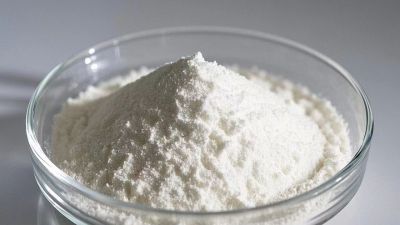
So global buyers keep asking a really practical question: why go with Inositol Powder for bulk supply? Honestly, it starts with consistency—not fancy advertising. If identity, purity, and particle characteristics stay steady from shipment to shipment, Inositol Powder can help you manufacture more repeatably. That's the core.
Dr. Vittorio Unfer, who's researched inositol and reproductive health, has written that 'myo-inositol is a safe and effective treatment for PCOS.' Fair enough—but that's a clinical statement, not a blanket promise for every buyer. So sourcing responsibly means reading things carefully. If you're buying in bulk, ask for a current certificate of analysis, clear assay results, microbiological limits, heavy-metal testing, and allergen info. And check whether you're getting myo-inositol, another isomer, or some defined blend.
Warehouse details matter too. A sealed bag, a dry storage area, an intact pallet, a visible lot number—these little things build confidence before production even starts. Good suppliers can give you batch traceability, spec sheets, stability info, and technical support that actually responds. They should also walk you through packaging for long-distance transport, including moisture protection and label control.
Then there's the commercial side. Bulk Inositol Powder can make inventory planning easier, cut down on repeated purchasing, and help keep formulation consistent. But a lower price by itself? That can hide risks you don't want. Maybe weaker documentation, maybe variable quality. Worth paying attention to.
No supply program is perfect. Seasonal demand, port delays, testing differences—they can still mess with delivery. So a qualified supplier needs contingency plans, transparent communication, and documented quality systems. For global buyers, trust gets built one verified batch at a time.
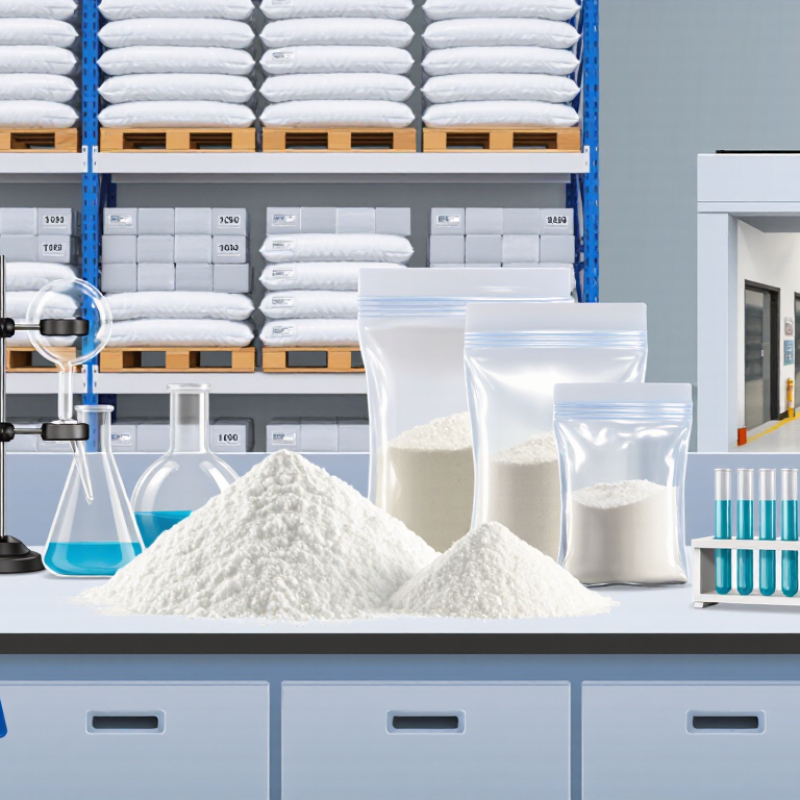
Inositol Powder Defined: C6H12O6, 180.16 g/mol, CAS 87-89-8
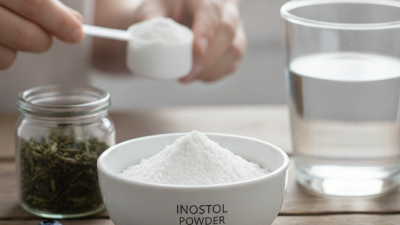
Inositol powder is attractive for global bulk supply because its identity is clear and widely recognized. Myo Inositol has the molecular formula C6H12O6, a molar mass of 180.16 g/mol, and CAS 87-89-8. These details support consistent documentation across purchasing, quality control, and logistics teams. Although it shares a formula with glucose, inositol is a distinct cyclic sugar alcohol. The difference matters when reviewing specifications and analytical records.
For experienced buyers, dependable supply begins with more than a competitive quotation. Each batch should have a clear certificate of analysis, confirming identity, assay, moisture, and microbiological status where applicable. Powder appearance also deserves attention. A clean white powder should move smoothly through weighing and blending equipment. Packaging must protect it from humidity during storage and transport. In practice, small variations in particle size can affect handling. This point is easy to overlook.
Tips: Ask for representative samples before approving a large order. Compare test methods, not only reported values. Check the CAS number and molecular weight on every technical document. Confirm pallet protection, inner liners, and storage conditions. Keep a retained sample for internal review. Supply planning is rarely perfect. A second qualified source may still be worth evaluating.
Myo-Inositol Explained: The Most Widely Used Form Among Six Stereoisomers
Myo-inositol is the most widely used form among the six stereoisomers of inositol. Its popularity comes from extensive research, familiar formulation behavior, and broad use in nutritional products. Compared with less common isomers, myo-inositol has a deeper technical record and clearer commercial demand. That matters for global bulk supply.
For procurement teams, powder offers practical advantages. It supports accurate weighing, compact storage, and flexible blending at production scale. Inositol Usp should be evaluated through more than a specification sheet. Buyers should review identity testing, assay results, microbial limits, heavy metal controls, and batch-to-batch consistency. Reliable documentation builds confidence across international supply chains. It also helps quality teams investigate deviations quickly.
In formulation work, powder flow can affect feeding accuracy and blend uniformity. Particle size, moisture exposure, and packaging design deserve close attention. Myo-inositol may appear simple. It is not always. A material can meet its assay target yet perform poorly during high-speed processing. Sampling plans should reflect the full batch, not only the surface layer. Storage records should track humidity and temperature, especially during long-distance shipping. Some procurement assumptions need revisiting. Lowest price does not always mean lowest total cost. A dependable supply program balances purity, documentation, physical performance, and realistic delivery capacity.
Bulk-Grade Quality: Compare ≥99% Assay, USP/NF, FCC, and GMP Controls
Why Choose Inositol Powder for Global Bulk Supply?
For Inositol Bulk purchasing, assay is only the opening checkpoint. A ≥99% assay means at least 99 grams of inositol per 100 grams of tested material. It does not prove low metals, microbiological safety, or batch uniformity. USP/NF standards add identity and purity expectations through validated monographs and laboratory procedures. FCC specifications can support food-grade suitability, especially where moisture, residue, and contaminant controls matter.
GMP controls make the specification practical. FDA’s current Good Manufacturing Practice rules for dietary supplements require written procedures, testing, records, and traceability under 21 CFR Part 111. The WHO Global Report on Traditional and Complementary Medicine emphasizes quality assurance across sourcing, production, and distribution. That principle fits bulk powder handling: sealed liners, lot-coded drums, calibrated scales, and retained samples should be visible in the audit trail.
Ask for an HPLC assay, heavy-metal results, microbiological limits, residual-solvent data, and a current certificate of analysis. Third-party ISO/IEC 17025 laboratory testing adds useful independence. Still, a certificate is not proof by itself. Sampling can be weak, and specifications may hide differences between lots. I would compare three consecutive batches, not one attractive result. Small details matter, such as caking around a drum liner or inconsistent powder flow. That is where quality claims meet reality.
Formulation Advantage: Evaluate Solubility, Particle Size, and Dose Uniformity
For global bulk supply, inositol powder should be judged by formulation performance, not price alone. Solubility affects processing speed, mouthfeel, and dose consistency. In pilot trials, powder that dispersed quickly in 25°C water reduced mixing time. A clear beaker helped, but visual clarity did not prove complete dissolution.
Particle size changes flow, wetting, and capsule filling. A narrow particle distribution can reduce segregation during blending and transport. However, very fine particles may bridge in hoppers or create dust. That trade-off needs testing. Laser diffraction, sieve checks, and bulk-density measurements provide useful evidence. For D Chiro Inositol, analysts should compare dissolution results across several lots, not one convenient sample. Assay alone is insufficient. Samples from the beginning, middle, and end of a blend can reveal uneven distribution.
Dose uniformity also depends on carrier selection, mixing energy, and humidity control. Validated sampling plans, blend-time studies, and replicate assays can expose process weaknesses. For liquid products, record dispersion time and sediment behavior after standing. For powders, examine flow through the actual filling equipment. Storage humidity, shipping vibration, and lot-to-lot results also matter. Some specifications look impressive but remain unchallenged under production conditions. That gap deserves a second review.
Global Compliance: Verify COA, GMO, Allergen, and Heavy-Metal Specifications
Why Choose Inositol Powder for Global Bulk Supply?
Global buyers need more than a competitive price. They need evidence that each inositol powder batch meets destination-market expectations. A complete certificate of analysis should identify the batch number, test methods, manufacturing date, assay, moisture, microbiological results, and retest date. Do not accept a generic COA copied across shipments. That shortcut creates avoidable risk.
Heavy-metal control deserves particular attention. ICH Q3D(R2) lists oral daily exposure limits of 5 micrograms for lead, 25 micrograms for cadmium, 15 micrograms for inorganic arsenic, and 30 micrograms for mercury. These figures help procurement teams evaluate laboratory results, although local regulations may differ. Testing should use validated ICP-MS or equivalent methods, with clear detection limits and laboratory accreditation. USP also provides recognized procedures for elemental impurities.
GMO and allergen statements must trace back to raw materials, processing aids, and production-line controls. A “non-GMO” claim without supplier declarations or change-control records is weak evidence. The same applies to allergen-free claims. Request an allergen matrix, cleaning validation summary, and current manufacturing certification. COA review should be paired with periodic independent testing, not replaced by paperwork. No document is perfect. Even experienced teams can miss a changed specification after reformulation. Reviewing every shipment remains practical, especially when supplying several regions with different limits.
Supply Economics: Compare MOQ, Packaging Sizes, Lead Times, and 24-Month Stability
Why Choose Inositol Powder for Global Bulk Supply?
For global bulk supply, inositol powder offers practical control over cost, storage, and production planning. Procurement teams should compare the minimum order quantity against actual demand, not only the quoted unit price. A lower MOQ may reduce inventory pressure, while a larger MOQ can improve pricing and simplify repeat shipments. Packaging sizes also matter. Twenty-five-kilogram bags may suit manufacturing sites, but smaller lined packs can reduce exposure after opening. That choice is easy to overlook.
Lead time should be measured from purchase confirmation to delivery at the receiving warehouse. Ask about production capacity, export documents, testing schedules, and seasonal delays. A reliable supplier should provide a realistic timeline rather than an optimistic promise. Inositol powder should also be supported by documented 24-month stability data under defined storage conditions. Stability is not a universal guarantee. Temperature, humidity, packaging integrity, and repeated opening can change performance. I have seen purchasing plans fail because storage conditions were treated as an afterthought.
Tips: Request a sample specification, recent certificate of analysis, packaging photos, and stability records before approving a large order. Compare landed cost, not just the product quotation. Build a small time buffer into the first shipment. It may feel unnecessary, but international logistics rarely follow a perfect schedule. Review MOQ and packaging assumptions every six months, because demand forecasts are often less accurate than expected.
Why Choose Inositol Powder for Global Bulk Supply? – Supply Economics: Compare MOQ, Packaging Sizes, Lead Times, and 24-Month Stability
| Supply Scenario |
Typical MOQ |
Common Packaging |
Indicative Price Range
(USD/kg, Ex-Works) |
Production Lead Time |
Export Readiness |
24-Month Stability |
Economic Consideration |
| Trial / Pilot Order |
100–250 kg |
20–25 kg multi-wall bags with food-grade inner liner |
4.80–7.50 |
2–4 weeks |
Palletized; suitable for courier, air, or LCL shipment |
Generally achievable* |
Lowest inventory commitment, but the highest packaging and handling cost per kilogram. |
| Standard Commercial Order |
500 kg |
20–25 kg bags; approximately 20–25 bags per pallet |
4.00–6.50 |
3–5 weeks |
Palletized and export-marked; practical for LCL or consolidated freight |
Generally achievable* |
Balances manageable inventory, flexible dosing, and better freight utilization than small trial orders. |
| Pallet / FIBC Program |
1,000 kg |
500–1,000 kg FIBC bulk bags with moisture-barrier liner |
3.50–5.80 |
4–6 weeks |
Efficient for palletized LCL or container loading |
Generally achievable* |
Lower packaging labor and material cost; requires suitable warehouse access and bulk-handling procedures. |
| Full-Container / Contract Supply |
5,000–20,000 kg |
FIBC bulk bags or 20–25 kg bags loaded on pallets, depending on production line |
2.80–5.00 |
5–8 weeks |
Best suited to full-container ocean freight |
Generally achievable* |
Usually delivers the lowest unit cost and freight cost per kilogram, but increases working-capital and storage requirements. |
| Custom Retail-Ready or Private-Label Packs |
1,000–5,000 kg |
Customized 100 g–5 kg packs, cartons, labels, and outer cases |
6.00–12.00+ |
8–14 weeks |
Requires artwork approval, packaging procurement, and additional quality checks |
Confirm by specification |
Value-added packaging can improve market usability but adds conversion, artwork, labor, and packaging-material costs. |
Planning notes: The price ranges are indicative bulk-planning estimates for standard myo-inositol powder and are not quotations. Actual pricing varies with purity, food or pharmaceutical grade, documentation, origin, order frequency, freight terms, currency, and market conditions. A 24-month shelf-life claim should be supported by the applicable specification, stability data, packaging configuration, and storage conditions. For planning purposes, unopened product is typically stored in a cool, dry, odor-free warehouse, protected from direct sunlight and moisture.
Food-Grade L-Glutamine Amino Acid Powder: Benefits, Uses, Quality, and Buying Guide
Food-grade L-glutamine is a non-essential amino acid involved in nitrogen transport, protein turnover, and cellular energy metabolism. During intense training, illness, or physical stress, demand may increase, which explains its inclusion in sports nutrition, meal-replacement formulas, and specialized dietary supplements. However, it should be presented accurately: glutamine is not a substitute for adequate total protein. The FAO/WHO/UNU expert report recommends approximately 0.83 g of protein per kilogram of body weight daily for healthy adults, while the NIH Office of Dietary Supplements notes that evidence for glutamine improving exercise performance is limited and inconsistent.
Demand for convenient nutrition products continues to expand. Grand View Research valued the global dietary supplements market at approximately USD 177.5 billion in 2023 and projected a compound annual growth rate of about 9.1% from 2024 to 2030. For manufacturers and buyers, high-purity, food-grade L-glutamine should therefore be evaluated through more than price. Important criteria include identity and assay testing, low moisture, good solubility, consistent particle quality, traceability, and compliance with applicable food-safety standards. A reliable powder should be supported by a certificate of analysis, microbiological testing, heavy-metal screening, and clearly defined storage conditions. These controls help maintain stable performance across capsules, powders, beverages, and other nutrition applications while supporting consistent global supply.
FAQS
Inositol powder is a cyclic sugar alcohol with the formula C6H12O6. Its molar mass is 180.16 g/mol. The identity number is CAS 87-89-8. It resembles glucose chemically, but it is not glucose.
Request a representative sample first. Review the certificate of analysis, specifications, and recent batch records. Check identity, assay, moisture, and microbiological results. Keep a retained sample for later comparison. Small checks prevent larger problems.
No. A 99% assay indicates at least 99 grams of inositol per 100 grams tested. It does not confirm low metals, microbiological quality, or consistent particle size. Review several batches instead of trusting one attractive result. One result is not enough.
Ask for an up-to-date certificate of analysis and validated test methods. Useful records include HPLC assay, moisture, heavy metals, microbiological limits, and residual solvents. Quality-system records should show lot traceability and calibrated equipment. Independent laboratory testing can add confidence. Still, documents need careful review.
Moisture protection is important during storage and transport. Use sealed inner liners and suitable outer containers. Inspect for caking near the liner or damaged packaging. Store the powder under documented temperature and humidity conditions. Powder flow may change after repeated opening.
Compare the minimum order quantity with realistic production demand. A smaller quantity may reduce inventory pressure. A larger quantity may lower unit cost but increase storage exposure. Larger bags suit some factories, while smaller lined packs may improve handling. The cheapest option may not be practical.
Measure lead time from order confirmation to warehouse receipt. Include production, testing, export documents, and transport. Ask for a realistic schedule, not only a confident promise. Add a small buffer for the first shipment. International schedules are rarely perfect.
No. Stability data applies to defined storage and packaging conditions. Temperature, humidity, damaged liners, and repeated opening can affect performance. Confirm whether the data matches your intended warehouse conditions. This point deserves more attention.
Conclusion
Inositol Powder is a reliable ingredient for global bulk supply, offering a defined chemical profile of C6H12O6, a molecular weight of 180.16 g/mol, and CAS 87-89-8. Among its six stereoisomers, myo-inositol is the most widely used form in nutritional and food-related formulations. For bulk purchasing, buyers should compare assay levels of at least 99% and confirm alignment with relevant USP/NF or FCC standards, supported by consistent GMP controls.
Product performance also depends on solubility, particle size, and dose uniformity, which can affect processing and formulation consistency. Before placing an order, importers should review the COA and verify GMO status, allergen declarations, and heavy-metal specifications. Supply economics should include MOQ, packaging options, production lead times, and documented stability, with a 24-month shelf-life target where appropriate. These factors help ensure dependable quality, regulatory readiness, and cost efficiency across international supply chains.