In today’s fast-changing world of food and pharmaceuticals, Pullulan Powder really stands out because of its versatility and unique features. The global market for functional food ingredients is expected to hit around $274 billion by 2025, with a big chunk coming from plant-based products. Pullulan Powder, which is a type of polysaccharide derived from starch, has been gaining popularity mainly because it helps improve texture and keeps products moist.
As companies like Huzhou Zhenxing Pharmaceutical and Ningbo Norsen Biotech boost their product lines, the demand for Pullulan Powder keeps climbing. It’s especially popular in vegan and gluten-free foods. Recently, studies show that consumers are becoming much more health-conscious, actively looking for alternatives to traditional additives that might compromise quality.
That said, sourcing good-quality Pullulan Powder isn’t always a walk in the park. Not every supplier sticks to strict quality standards, which can lead to inconsistencies in the final product. This really makes you think about how businesses can improve their sourcing strategies. As the market keeps growing, building trustworthy partnerships is more important than ever for manufacturers who want to tap into the full potential of Pullulan Powder.

Understanding Pullulan Powder: Characteristics and Applications
Pullulan powder is gaining traction in various industries due to its unique properties. This polysaccharide, derived from fermentation, boasts excellent film-forming capabilities. It also offers superior solubility and stability. According to a recent industry report, the global pullulan market is projected to reach $120 million by 2026. This growth is driven by increasing demand in the food, cosmetics, and pharmaceutical sectors.
In food applications, pullulan serves as a natural thickening agent and food preservative. With consumers focusing on clean-label products, pullulan fits the bill. Its use in edible films enhances product shelf life while maintaining quality. The pharmaceutical industry also benefits from pullulan's non-toxic nature. It is used in drug delivery systems, offering controlled release of active ingredients.
Despite its advantages, there are challenges to consider. The production costs can be high, impacting affordability for small businesses. Quality control can vary, leading to inconsistent results. Understanding these nuances is crucial for anyone navigating the Pullulan Bulk supply chain. Companies must weigh the benefits against potential issues. As the industry evolves, addressing these concerns will be vital for sustained growth.
The Importance of Wholesale Services in the Pullulan Powder Market
The pullulan powder market is expanding rapidly. In 2026, wholesale services will be pivotal. Demand for natural thickening agents is on the rise. Pullulan, derived from tapioca, is highly sought after in food and pharmaceuticals. It offers unique properties like film-forming capabilities and low-calorie content.
Recent reports highlight a projected CAGR of 5.2% for pullulan products through 2026. This growth will depend on robust wholesale services. Distributors must ensure quality and supply chain efficiency. Factories should prioritize sourcing from reliable producers. This helps maintain product integrity, especially when scaling up.
Tip: Always validate supplier certifications. Genuine pullulan should comply with food safety standards. Check for quality assurance tests.
Market players face challenges. Price volatility and sourcing inconsistencies can hinder progress. Access to competitive pricing is essential. Wholesale services must adapt to these trends. Establishing strong relationships with manufacturers can help mitigate risks, ensuring a steady product flow.
Tip: Regular market analysis is vital. Stay updated on emerging trends in the pullulan industry. This knowledge can guide better decision-making.
Key Suppliers and Manufacturers of Pullulan Powder in China
China has become a significant player in the global market for Pullulan powder. This natural polysaccharide, derived from starch, is gaining attention for its versatility and eco-friendliness. Many suppliers in China specialize in producing Pullulan, catering to the growing demand across various industries, including food, pharmaceuticals, and cosmetics.
When considering suppliers, quality is paramount. Some manufacturers focus on organic sources, ensuring their Pullulan powder meets high standards. However, not all suppliers maintain these standards. Buyers must conduct thorough research and demand certifications. This can be challenging, as not every supplier is transparent about their sourcing and production methods. Engaging with suppliers who prioritize ethics and quality can lead to better outcomes for businesses.
In 2026, the landscape of Pullulan suppliers may evolve. Emerging manufacturers might enter the market, offering competitive pricing or innovative processes. This could create both opportunities and challenges. Companies must remain vigilant and adaptable. The search for reliable Pullulan sources requires ongoing reflection and adjustment. Engaging with reputable suppliers is essential for success.
Factors Influencing Pricing of Pullulan Powder in 2026
In 2026, the pricing of pullulan powder will be influenced by various key factors. Supply and demand dynamics will play a crucial role. If demand surges, prices may rise unexpectedly. Conversely, if supply increases, companies could see lower pricing.
Another major factor is raw material availability. The sourcing of Ve Powder directly affects production costs. When the quality of ingredients fluctuates, manufacturers might adjust their prices accordingly. This often reflects in the final price to customers.
Tips: Always stay informed about market trends. Establish relationships with suppliers to secure better pricing. Consider bulk purchases during low-demand periods. This can lead to significant cost savings. Monitoring competitors can also help adjust pricing strategies effectively. Be aware that pricing is not just about costs but also about perceived value.
The Ultimate Guide to Wholesale China Pullulan Powder Service in 2026
| Factor |
Impact on Pricing |
Estimated Cost Range (per kg) |
| Raw Material Quality |
High quality increases price |
$10 - $15 |
| Production Volume |
Bulk orders lower price |
$8 - $12 |
| Market Demand |
High demand raises prices |
$12 - $18 |
| Shipping and Logistics |
Higher costs in remote areas |
$9 - $14 |
| Regulatory Compliance |
Add costs for certifications |
$11 - $16 |
| Supplier Relationships |
Long-term partnerships lower prices |
$9 - $13 |
Quality Standards and Certifications for Pullulan Powder
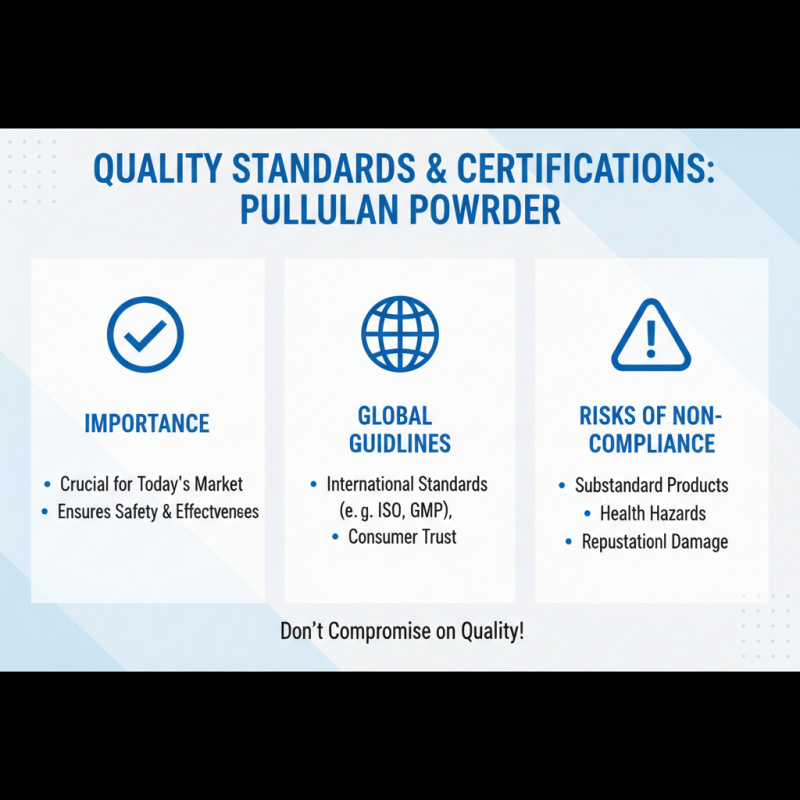
The quality standards for Pullulan powder are critical in today’s market. Many manufacturers strive to meet international guidelines. However, some may cut corners. This can affect the safety and effectiveness of the product.
Certifications play a huge role in ensuring quality. Common certifications include ISO and HACCP, which companies should prioritize. Not every supplier will have these. This creates uncertainty for buyers. It's essential to verify the authenticity of certifications. Always ask for documentation.
Buyers should also consider sourcing practices. Responsible sourcing can lead to better quality. Paba Powder, for instance, has known quality issues. Ensuring your supplier’s integrity is key. If standards are low, the end product may not meet expectations. Regular audits could be necessary, even if they seem tedious. They bring peace of mind. These factors can help buyers make informed choices in a complex market.
Supply Chain Dynamics of Pullulan Powder in Wholesale Markets
The wholesale market for Pullulan powder in 2026 is shaped by complex supply chain dynamics. Reports indicate that global demand for this natural polysaccharide is growing rapidly. In particular, the food and pharmaceutical sectors are major consumers, accounting for about 70% of total demand. This surge drives suppliers to adapt their processes to meet varying customer needs.
Supply chain challenges also emerge. Sourcing raw materials for Pullulan production can be inconsistent. A recent study revealed that 45% of suppliers experience delays in obtaining key ingredients. Such interruptions can disrupt the entire manufacturing process. Companies must evaluate their logistics strategies. Efficient communication with suppliers is crucial. Additionally, maintaining quality while scaling up production is a persistent concern.
Moreover, market fluctuations lead to unpredictable pricing. A 2023 analysis noted that Pullulan prices had increased by 15% due to raw material scarcity. Companies might consider diversifying their sourcing options. It’s essential to remain flexible and responsive. The ability to adapt to changing market conditions can spell success or failure in this competitive landscape. Understanding these dynamics is key for businesses looking to thrive in the Pullulan powder market.
Future Trends and Innovations in the Pullulan Powder Industry
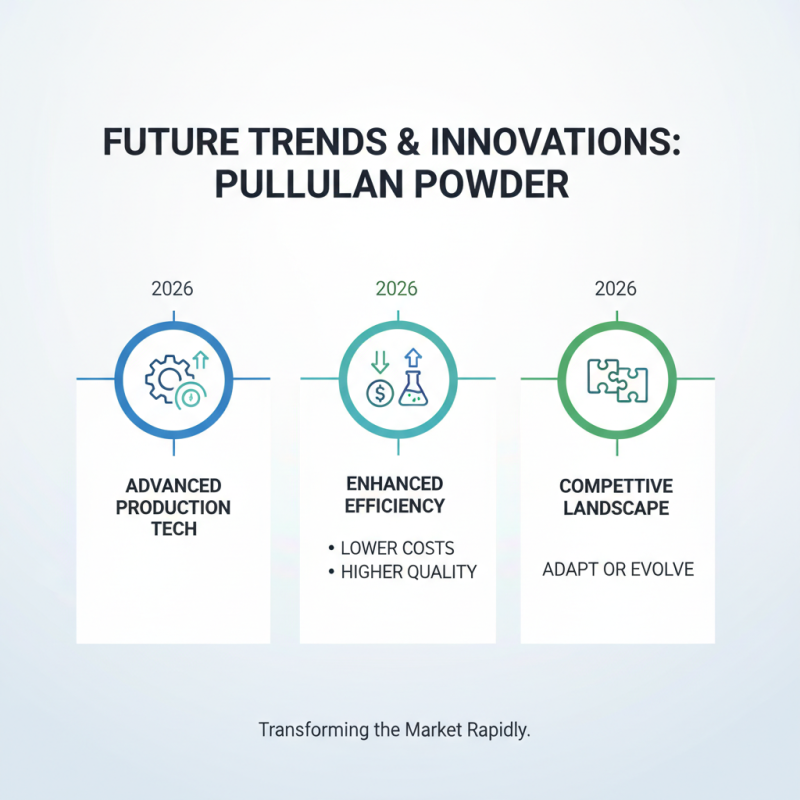
The pullulan powder industry is evolving rapidly. In 2026, we will see new innovations transforming the market. Advances in production technology will enhance efficiency. This means lower costs and higher quality. All these changes create a competitive landscape. Manufacturers must adapt quickly.
Consumer demand for natural ingredients is rising. This trend pushes for more sustainable sourcing of pullulan. New extraction methods will reduce environmental impact. However, challenges remain in sourcing raw materials responsibly. Some suppliers struggle with ethical practices. Transparency in the supply chain is essential for credibility.
Moreover, the application of pullulan is expanding. It is used in food, pharmaceuticals, and cosmetics. The versatility of pullulan makes it attractive. But businesses must continuously invest in research. It is vital to innovate while ensuring safety and compliance. The future of pullulan powder is bright, yet it requires careful navigation of new challenges.
Exploring the Benefits and Uses of Natural High-Purity Pullulan Powder: A Vegan-Friendly Ingredient for Health and Wellness
Natural high-purity pullulan powder, derived from the fermentation of natural sources, has emerged as a versatile ingredient in the health and wellness sector. This water-soluble polysaccharide is known for its excellent film-forming and thickening properties, making it an ideal candidate for various applications in food, beverages, dietary supplements, and pharmaceuticals. According to market research by Mordor Intelligence, the demand for natural and clean-label ingredients is driving the growth of the pullulan market, particularly within vegan and plant-based product formulations.
One of the most significant advantages of pullulan is its vegan-friendly profile, aligning with the increasing consumer preference for plant-based products. It serves as a suitable alternative to traditional thickening agents and emulsifiers, offering a clean taste while enhancing the textural quality of food and drink products. Furthermore, its biocompatibility allows for its inclusion in dietary supplements and pharmaceutical formulations without compromising health standards. Research from the International Journal of Food Science indicates that pullulan can contribute not only to improved product consistency but also to enhanced nutritional delivery systems.
As dietary trends continue to shift towards transparency and sustainability, pullulan powder stands out as a clean-label ingredient. Its applications extend to reducing the need for artificial additives, making it a popular choice amongst manufacturers aiming to meet consumer demands for more natural products. With industry reports projecting significant growth in the functional foods sector, the integration of high-purity pullulan powder into various formulations is likely to become commonplace, fostering innovation in health and wellness products.
FAQS
: Wholesale services ensure quality and supply chain efficiency, which are critical for growth in this expanding market.
The expected CAGR for pullulan products is 5.2% through 2026, indicating a strong demand surge.
Businesses should prioritize sourcing from reliable producers and validate supplier certifications to maintain product quality.
Price volatility and sourcing inconsistencies can hinder progress and access to competitive pricing remains essential.
Buyers should ask for documentation of certifications like ISO and HACCP and always check for authenticity.
Responsible sourcing contributes to better quality products and ensures that suppliers meet safety and effectiveness standards.
Yes, it can create uncertainty for buyers and lead to low-quality products that don’t meet expectations.
Regular audits and market analysis can provide peace of mind and help buyers stay informed on emerging trends.
Manufacturers should prioritize sourcing from reliable producers to mitigate risks and ensure a steady flow of quality products.
Establishing strong relationships with manufacturers can help businesses navigate changes and adapt more efficiently.
Conclusion
The article "The Ultimate Guide to Wholesale China Pullulan Powder Service in 2026" provides a comprehensive overview of Pullulan Powder, detailing its unique characteristics and diverse applications across various industries. It emphasizes the significance of wholesale services within the Pullulan Powder market, highlighting key suppliers and manufacturers in China, and the dynamics of the supply chain that influence pricing trends in 2026.
Additionally, the guide discusses essential quality standards and certifications that ensure the reliability of Pullulan Powder, alongside emerging trends and innovations anticipated in the industry. This holistic approach not only sheds light on the current state of the Pullulan Powder market but also prepares stakeholders for future developments, making it an invaluable resource for anyone involved in wholesale purchasing and distribution.