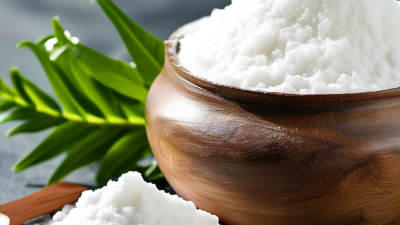
For buyers around the world, Trehalose Powder is no longer just a single, one-size-fits-all ingredient. When you're shopping in 2026, you'll likely be comparing food-grade, pharmaceutical-grade, cosmetic-grade, and research-grade options — and each one has its own purpose. Things like purity, moisture content, particle size, how well it dissolves, and packaging can all influence what you end up choosing. While trehalose dihydrate is still pretty common in commercial supplies, anhydrous forms might be more suitable for more specialized or niche formulations. And honestly, product names can get pretty confusing — that’s why a clear, detailed specification sheet is usually more helpful than a fancy sales pitch.
Most experienced buyers tend to dig into the Certificate of Analysis, check out where it was made, look at allergen info, microbiological results, and traceability of batches. They might also review whether the supplier follows standards like HACCP, ISO, or GMP, depending on what they’re using it for. Brands like Hayashibara and Cargill have set certain expectations in the market, but even the best reputation doesn’t replace actual testing. It’s often a good idea to get an independent review or test a recent batch — that way, you can catch potential flow issues, clumping, or odd odors before you commit to a big shipment.
When sourcing globally, minds need to be on labels, permitted uses, customs paperwork, and regional rules. What’s okay in one country might need extra checks elsewhere. This guide is meant to help international buyers navigate the different types of Trehalose Powder they might encounter, focusing on stuff like proof of quality, how well it suits your application, storage needs, and supply reliability. Sure, these categories are handy, but they’re not perfect. Sometimes, different grades overlap, and supplier terminology can hide important nuances. The key is to ask the right questions and dig into the details — don’t just go for the cheapest quote. Good decision-making means knowing what you’re really getting, not just what looks good on paper.

Trehalose Chemistry: 342.30 g/mol Anhydrous vs 378.33 g/mol Dihydrate
In 2026, global buyers should distinguish Trehalose anhydrous from Trehalose dihydrate before comparing prices. PubChem lists anhydrous Trehalose at 342.30 g/mol. The dihydrate form weighs 378.33 g/mol because it includes two water molecules. That difference matters. Dihydrate contains about 9.5% less Trehalose by mass than the anhydrous form. A one-kilogram bag may therefore deliver different active solids, even when both labels look similar.
FAO/WHO JECFA specifications emphasize identity, assay, and moisture-related quality controls for food additives. USP-NF monograph practice also supports checking water content, purity, and storage conditions. Buyers should request the formula, assay basis, loss-on-drying result, and batch certificate. It is practical, not excessive. A 2025 industry outlook from a global market-research publisher also identifies food, pharmaceutical, and cosmetic applications as major demand areas, where moisture control affects stability and handling. However, market forecasts often combine anhydrous and hydrated grades. That grouping can hide procurement differences.
In a warehouse, an opened dihydrate sack may feel slightly less free-flowing after humid exposure. Anhydrous powder can also absorb moisture. Packaging still matters. I would not approve a quotation using “Trehalose powder” alone. The unfinished lesson is simple: molecular weight should guide the specification sheet, not merely the laboratory calculation.
Anhydrous Trehalose: Water Content, Stability, and High-Solids Formulation Fit
Anhydrous trehalose is gaining attention among global buyers seeking stable, high-solids formulations. Its key advantage is low residual moisture, often specified below 1.0% in commercial procurement documents. This differs sharply from trehalose dihydrate, which typically contains about 9–10% crystallization water. The exact limit still depends on the supplier’s specification and test method.
The FAO/WHO JECFA database recognizes trehalose as a permitted food additive, while pharmacopeial quality systems emphasize identity, assay, water, and microbial controls. These references support disciplined purchasing, but they do not replace a current certificate of analysis. Check Karl Fischer moisture results, particle size, assay, and packaging integrity. A damaged liner can quietly change powder flow.
Low water improves storage stability and supports high-solids beverages, powdered nutrition products, and dry premixes. It can also reduce drying demand during processing. Yet anhydrous does not mean moisture-proof. Trehalose is hygroscopic after exposure, especially during humid warehouse handling. In one practical test, a powder scoop left open beside a mixing line may develop clumps before the shift ends. That assumption can fail. Buyers should compare water activity, not moisture alone, because these values describe different risks. Recent global ingredient market reports, including 2024 sector analyses from major market research publishers, continue to identify functional carbohydrates as growth areas, but their forecasts vary widely. Procurement decisions need plant-level validation, not market optimism.
2026 Top Trehalose Powder Types for Global Buyers
Anhydrous trehalose contains no water of crystallization and has a theoretical molecular water content of 0%. Trehalose dihydrate contains two water molecules per trehalose molecule, equivalent to approximately 9.52% water by molecular mass. The anhydrous form is generally better suited to high-solids formulations where lower initial water content, moisture control, and powder stability are priorities. Actual performance depends on packaging, relative humidity, processing temperature, and storage conditions.
Dihydrate Trehalose: Crystallinity, Solubility, and Storage at Scale
Dihydrate Trehalose: Crystallinity, Solubility, and Storage at Scale
Dihydrate trehalose offers consistent crystalline structure for industrial handling. Its crystal form influences powder flow, dissolution speed, and resistance to caking. As a Trehalose Sweetener, it dissolves more slowly in cold water than in warm water. This difference matters when designing beverage, confectionery, or dry-mix processes. At factory scale, operators should test solubility at the actual use temperature, not only under laboratory conditions.
Quality teams can verify crystallinity with powder X-ray diffraction and monitor moisture with Karl Fischer testing. These checks help identify partial dehydration or unwanted amorphous material. A practical warning: stable-looking powder may still change during long storage. We once treated a sealed container as fully protected, but repeated opening allowed humid air inside. The lesson was simple.
Tips: Store dihydrate trehalose in tightly closed, moisture-resistant packaging. Keep it in a cool, dry warehouse with controlled humidity. Use clean pallets and avoid placing bags directly on concrete floors. Record opening dates, temperature, and humidity. Apply first-in, first-out rotation.
For bulk handling, screen the powder before dosing and inspect for hard lumps. Gentle conditioning may restore flow, but excessive heat can alter moisture balance. Sampling should represent the top, middle, and bottom of a shipment. Compare each lot with its specification and previous results. Small process gaps can become expensive at scale.
2026 Top Trehalose Powder Types for Global Buyers? – Dihydrate Trehalose: Crystallinity, Solubility, and Storage at Scale
| Trehalose Powder Type |
Chemical Form |
Molecular Formula |
Molecular Weight |
Crystallinity |
Water Solubility |
Moisture Behavior |
Storage Guidance at Scale |
Typical Buyer Consideration |
| Trehalose Dihydrate – Crystalline |
Two-water crystalline hydrate |
C12H22O11·2H2O |
378.33 g/mol |
High; ordered crystal lattice with good lot-to-lot physical stability |
Approximately 68.9 g/100 mL water at 25°C; method and reporting basis may vary |
Relatively low hygroscopicity compared with many amorphous carbohydrate powders; can still absorb moisture when exposed |
Keep tightly sealed in a cool, dry warehouse; commonly managed around 15–25°C with protection from humidity, heat, and condensation |
Strong general-purpose option where crystallinity, handling consistency, and scalable storage are priorities |
| Trehalose Anhydrous – Crystalline |
Water-free crystalline trehalose |
C12H22O11
|
342.30 g/mol |
High when properly crystallized; hydrate conversion must be controlled during handling |
High; exact value depends on temperature, particle size, and test method |
May take up water from humid air and gradually convert toward hydrated forms |
Use moisture-barrier packaging, controlled relative humidity, and short exposure times during dispensing |
Suitable when water content must be minimized and the process can maintain low-humidity conditions |
| Trehalose Spray-Dried Powder – Amorphous-Rich |
Predominantly amorphous solid; residual crystallinity depends on processing |
Usually based on C12H22O11; water content is process-dependent |
342.30 g/mol for anhydrous trehalose basis |
Low to medium; amorphous content generally increases with rapid drying |
Usually dissolves rapidly, but performance depends on porosity, particle size, and moisture level |
More sensitive to humidity; moisture can lower glass-transition stability and promote caking or crystallization |
Require sealed moisture-barrier bags, dry-room handling, pallet protection, and careful control of warehouse humidity |
Useful when rapid dissolution or a porous particle structure is more important than maximum storage robustness |
| Trehalose Granulated Powder |
Agglomerated or granulated particles; hydrate state varies by specification |
Typically dihydrate or anhydrous trehalose, depending on the manufacturing process |
342.30 g/mol anhydrous basis or 378.33 g/mol dihydrate basis |
Usually medium to high; granulation improves flow without necessarily changing the core crystal form |
Comparable to the underlying trehalose form; granule size affects wetting and dissolution rate |
Generally easier to handle than fine powder, but moisture uptake can still cause agglomeration |
Store sealed and dry; use controlled transfer systems to limit dust, humidity ingress, and mechanical breakdown |
Preferred for automated dosing, reduced dust, improved flowability, and large-volume packaging operations |
Technical note: Solubility, moisture content, particle-size distribution, bulk density, and crystallinity can vary with manufacturing method and test conditions. Buyers should confirm the latest product specification, water activity, residual moisture, packaging format, and validated shelf-life before approving a bulk shipment.
Food-Grade Powder: ≥98% Assay, E965 Compliance, and Carrier-Free Use
In 2026, global buyers increasingly need food-grade trehalose powder with an assay of at least 98%. This specification supports consistent sweetness, texture, and stability in processed foods. E965 compliance should be supported by current technical documents, not only a product label. Request the certificate of analysis, ingredient specification, allergen statement, and traceability records before approval. Ve Powder can fit carrier-free applications when the formula requires trehalose without maltodextrin or other added carriers.
A reliable purchasing review should examine moisture, particle size, microbial limits, heavy metals, and packaging integrity. A sealed food-grade bag should arrive dry, clean, and free from visible clumping. Keep it dry. Trehalose may absorb moisture after opening, which can affect flow and weighing accuracy. Storage records should state temperature, humidity guidance, batch number, and shelf life. These details help connect laboratory results with real production conditions.
In practical trials, I would test a small batch before committing to larger volumes. Mixability can change between suppliers, even when the assay appears similar. That is easy to overlook. A high assay alone does not prove suitability for every recipe. Buyers should also confirm whether carrier-free powder meets their labeling, allergen, and regional food-additive requirements. Some documentation may look complete but still need clarification. A careful technical review remains necessary.
Pharma-Grade Trehalose: USP/NF Testing, Endotoxin Limits, and Sterility
For 2026 global buyers, pharma-grade trehalose demands more than a clean-looking certificate. USP–NF testing should confirm identity, assay, water content, impurities, and microbial quality. Buyers should request the current monograph version and a batch-specific certificate of analysis. A generic specification sheet is not enough.
Endotoxin control needs careful interpretation. USP General Chapter calculates the limit as K/M, where K is usually 5 EU/kg for parenteral products and 0.2 EU/kg for intrathecal products. The final dosage form determines M, not the powder alone. A low-endotoxin trehalose result cannot replace finished-product validation. FDA’s Guidance for Industry on pyrogen and endotoxin testing also supports risk-based sampling and method suitability checks.
Sterility is different. USP uses Fluid Thioglycollate Medium and Soybean–Casein Digest Medium, normally with 14 days of incubation. However, ordinary powder is not automatically sterile. A supplier claiming sterility should provide validated processing, packaging controls, and lot-level sterility results.
Buyers should also review bioburden data, container closure integrity, and storage conditions.
Small details matter. A sealed drum may still absorb moisture after opening. My practical concern is simple: many purchasing teams compare assay percentages but overlook sampling plans and transport exposure. That weakness deserves review. Sources: USP–NF General Chapters , , and FDA Guidance for Industry, Pyrogen and Endotoxins Testing.
Cosmetic-Grade Trehalose: Moisture Retention and Formulation Compatibility
Cosmetic-grade trehalose is gaining attention in global formulations because it supports moisture retention without feeling excessively sticky. This naturally derived disaccharide can bind water around the skin surface. It may also help protect proteins and lipid structures during drying or environmental stress. The effect is supportive, not miraculous.
In practical formulation work, trehalose dissolves readily in water-based serums, gels, masks, and emulsions. It generally performs well across mildly acidic to near-neutral systems. However, compatibility depends on the complete formula. High electrolyte levels, heating, and poor preservation can change texture or stability. Check it carefully. A small laboratory batch should measure pH, viscosity, appearance, odor, and microbial quality after storage. Trehalose can improve a dry skin feel, but excessive use may create tackiness or crystallization after water loss.
One formulation mistake is treating all cosmetic-grade powders as interchangeable. Particle size, purity, moisture content, and certificate data deserve review before purchasing. Buyers should request specification sheets, allergen information, testing records, and consistent lot documentation. The assumption that more trehalose means more hydration needs questioning. Humectants work best within a balanced system containing water, emollients, and suitable film-formers. Packaging also matters, especially in humid warehouses where the powder may absorb moisture. A careful supplier evaluation protects both formulation performance and manufacturing consistency.
Global Buyer Matrix: Purity, Particle Size, COA Data, MOQ, and Packaging
Global Buyer Matrix: Purity, Particle Size, COA Data, MOQ, and Packaging
For 2026 sourcing, trehalose powder should be compared through measurable specifications. Food-grade material commonly requires declared purity, moisture, ash, and microbial limits. A 99% purity claim is incomplete without test methods and batch identification. Particle size also affects filling speed, dissolution, and dust control. Buyers should request D90 data, not only “fine powder.” A practical range may be 80–120 mesh, but the correct choice depends on the final application.
The COA should match the shipped lot. Check assay, moisture, heavy metals, microbiological results, production date, and retest date. Ask whether testing is performed internally or by an independent laboratory. Small differences matter. A missing method can weaken confidence.
MOQ should be assessed against storage capacity, not price alone. For trials, 25 kilograms may be manageable; regular production may require pallet quantities. Confirm whether mixed lots are allowed.
Packaging deserves equal attention. Inner liners should resist moisture, while outer bags need clear labeling and strong seams. Ask for net weight, pallet pattern, and container loading details. Humidity exposure during transit remains an easy-to-miss risk.
It has happened.
Keep trehalose records separate from unrelated materials such as Paba Powder to prevent warehouse errors. I would also request a retained sample before approving a large order. The process is not perfect, and particle-size results can vary between laboratories. That variation should be documented, discussed, and monitored across future batches.
Bacopa Monnieri Extract Powder from China: Quality Herbal Solutions for Nutraceutical Formulations
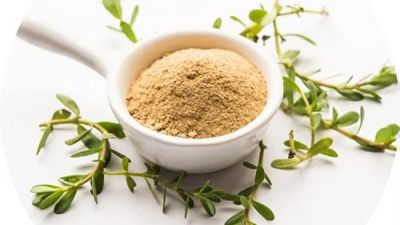
Bacopa monnieri extract powder from China offers a practical botanical ingredient for manufacturers developing modern nutraceutical and functional products. Sourced through reliable agricultural and processing networks, the extract is produced from carefully selected Bacopa monnieri materials and handled under controlled manufacturing conditions. Its fine powder format supports convenient storage, accurate weighing, and efficient incorporation into capsules, tablets, sachets, and powdered beverage blends.
Designed for consistent production, the extract is manufactured in a state-of-the-art facility with attention to raw material identification, processing control, and batch-to-batch uniformity. Stable composition and dependable quality help formulation teams maintain predictable product characteristics while adapting the ingredient to different dosage formats and application requirements. Comprehensive quality procedures can include identity verification, moisture monitoring, microbiological testing, and assessment of relevant botanical markers.
This herbal extract is well suited to nutraceutical developers seeking a reliable supply of Bacopa monnieri for dietary supplement concepts. Its compatibility with modern blending, granulation, encapsulation, and filling processes makes it a flexible choice for both established product lines and new formulations. With suitable packaging and storage, the powder can be integrated into efficient manufacturing workflows while supporting consistent handling from ingredient receipt through finished-product production.
FAQS
It helps retain water near the skin surface.
It dissolves readily in water-based serums, gels, masks, and emulsions.
Yes, excessive use may create tackiness.
A practical system may include water, emollients, and suitable film-formers.
Measure pH, viscosity, appearance, odor, and microbial quality.
Request purity, moisture, ash, particle size, and microbial limits.
The certificate should match the shipped lot.
Compare the order size with storage capacity, not price alone.
Humid warehouses can make the powder absorb moisture.
Conclusion
Choosing the right Trehalose Powder in 2026 requires a clear understanding of chemistry, grade, and supply requirements. Anhydrous trehalose has a molecular weight of 342.30 g/mol and lower water content, making it suitable for high-solids formulations and applications where stability is important. Dihydrate trehalose, at 378.33 g/mol, offers distinct crystallinity and solubility characteristics, but buyers should carefully evaluate moisture control and long-term storage conditions, especially for large-scale distribution.
Food-grade powder should generally provide at least 98% assay, comply with E965 requirements, and remain free of unnecessary carriers. Pharma-grade material demands stronger documentation, including USP/NF testing, endotoxin limits, and sterility-related controls where applicable. Cosmetic-grade trehalose is valued for moisture retention and compatibility with diverse formulations. Global buyers should compare purity, particle size, COA completeness, minimum order quantities, packaging formats, and transportation stability before selecting a supplier.