Leave Your Message
Hey, could you send over any relevant articles—or point me to a real, verifiable expert in the Nicotinamide Powder industry, with their actual words? Otherwise, I’m kind of stuck: I can’t reliably cite names or opinions, and honestly, I don’t want to make up quotes.

Nicotinamide powder is identified by CAS 98-92-0. Its molecular formula is C₆H₆N₂O, and its molar mass is 122.12 g/mol. These figures help buyers check whether a specification sheet describes the intended substance. They are useful starting points, not a complete quality assessment. A matching CAS number alone does not confirm purity, handling conditions, or suitability for a particular application.
When evaluating manufacturers, request a recent, lot-specific certificate of analysis. Review the identity test, assay result, moisture information, and test methods. Check that the batch number on the document matches the package. A sealed container should have a clear label and intact packaging; even small discrepancies deserve a question. Requirements can differ by application, so buyers should confirm their own specifications with a qualified technical professional. Paperwork is helpful, but it cannot replace sensible incoming inspection.
Tips: Compare documents, not just quoted prices. Ask how samples are stored and shipped, and whether packaging protects the powder from moisture. Keep a retained sample when practical. I would not treat one tidy data sheet as proof of consistent supply; checking more than one batch gives a fuller picture, though it takes extra time.
Supplier-neutral reference table for comparing nicotinamide powder offers. Specifications that vary by grade, intended use, or supplier should be confirmed in the current product specification and batch-specific Certificate of Analysis (COA).
| Data dimension | Reference information | What global buyers should verify |
|---|---|---|
| Substance identity | Nicotinamide (niacinamide) | Confirm the stated substance and intended grade match the purchasing specification. |
| CAS Registry Number | 98-92-0 | Check consistency across the product specification, COA, safety data sheet, and shipping documents. |
| Molecular formula | C₆H₆N₂O | Use as an identity cross-check; it does not replace analytical testing or documentation. |
| Molar mass | 122.12 g/mol | Confirm the declared identity and calculation basis are consistent with the product documentation. |
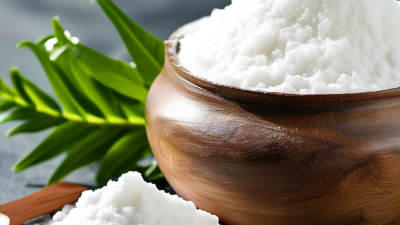
| Appearance | Typically a white crystalline powder | Review the supplier’s appearance specification and assess the received material against it. |
| Melting point | Approximately 128–131 °C, depending on the reference and test method | Compare reported results with the agreed specification and stated analytical method. |
| Water solubility | Soluble in water | If quantitative solubility matters, request the test conditions and value applicable to the offered grade. |
| Purity and impurity limits | Limits are grade- and specification-dependent; no universal supplier value is assumed here. | Compare the agreed limits with the batch COA, including the assay method and relevant impurity tests. |
| Grade and intended use | Requirements depend on the application and destination market. | Confirm suitability for the intended use and applicable local regulatory requirements before purchase. |
| Quality documents | Documentation availability varies by supplier and grade. | Request current product specifications, batch COA, safety data sheet, and any application-specific documentation required. |
| Packaging and shelf life | Pack sizes, storage instructions, and retest or expiry dating are supplier- and product-specific. | Confirm packaging integrity, storage conditions, dating, and transport requirements in writing. |
| Export and logistics | Lead time, minimum order quantity, and shipping terms depend on the offer and route. | Obtain written confirmation of availability, origin, Incoterms, customs documents, and delivery schedule. |
Reference note: Physical-property values are general reference information. For purchasing decisions, use the supplier’s current specification and batch-specific test results.
Berberine HCl is used in nutraceutical and pharmaceutical formulations where ingredient identity, purity, and batch-to-batch consistency are essential. Its selection should be supported by specifications for assay, related substances, moisture, microbiological quality, and elemental impurities, alongside stability data suited to the intended dosage form. A high-purity Berberine Hydrochloride can provide a consistent starting material for capsules, tablets, and other formulation research, while supplier documentation such as a certificate of analysis helps manufacturers verify quality and maintain process control.
Published clinical evidence also informs interest in the ingredient. A 2015 systematic review and meta-analysis in *PLOS ONE* assessed 14 randomized trials involving 1,068 participants with type 2 diabetes and reported outcomes associated with berberine use, while noting limitations in the underlying studies. These findings are research context, not a guarantee of product performance or a substitute for regulatory review. For product development, formulators should assess bioactivity and stability in the finished formulation, consider potential interactions and appropriate use warnings, and ensure any claims are supported by evidence applicable to the specific product.
It measures nicotinamide after moisture is excluded. Do not confuse it with an as-is result.
The stated benchmark is 98.0%–102.0% on a dried basis. Check that the certificate clearly identifies this basis.
Look for the assay method, result, test date, and batch number. Moisture data helps explain the powder as received.
No. A 99% assay alone does not show every impurity or how the result was measured.
Ask for identified impurities, test methods, and acceptance limits. Small differences can matter.
Compare assay and impurity results from several recent lots. One strong sample proves little.
Review the system’s scope, audit records, and controls for cleaning, storage, and traceability. Ask for evidence.
Not always. For critical uses, qualified third-party testing may help, though it takes time. Some questions may remain.
Nicotinamide Powder, identified by CAS 98-92-0, has the formula C₆H₆N₂O and a molar mass of 122.12 g/mol. Global supply comes from manufacturers across multiple production regions, serving buyers through direct sales, distributors, and other supply channels. When comparing potential suppliers, buyers can assess product purity, specified impurity limits, good manufacturing practices, and consistency between batches. A useful quality reference is the USP assay range of 98.0%–102.0% on a dried basis.
Before placing an order, request and review the certificate of analysis, safety data sheet, traceability information, and relevant regulatory documentation. Procurement planning should also account for minimum order quantities, packaging options, production and delivery lead times, and agreed Incoterms. Evaluating these factors together helps buyers compare offers, confirm that documentation matches their requirements, and select a reliable supply arrangement for their intended market and application.