Get a Quote
Leave Your Message
Describe your specific request*
0%

When it comes to China’s top Monosodium Glutamate (MSG) manufacturers and suppliers, people are paying more attention to quality, consistency, and reliable delivery these days. MSG is pretty much everywhere — from soups and sauces to snacks and ready-made meals — all about boosting that savory flavor. But, honestly, choosing the right supplier isn’t just about the lowest price. Savvy buyers tend to dig deeper, checking things like purity standards, production capacity, packaging options, and their exporting track record before making a move.

A trustworthy supplier should be transparent and ready to share clear technical docs—things like product specs, certificates of analysis, allergen info, and traceability details. And if you get a chance to do a factory audit, that’s even better. Factory visits can reveal a lot — is the warehouse clean? How do they handle moisture? Is the labeling accurate? Are the pallets protected? Those little things really matter because they can impact how long the product lasts and how smoothly your production runs.

This guide mainly covers Chinese manufacturers and suppliers who are professional, communicative, and maintain consistent quality. Don’t forget to consider how quickly they respond, their minimum order quantities, private-label options, and shipping arrangements. Sometimes, a supplier might be cheap on price but cause delays because of poor documentation or inconsistent batches—that’s a risk you definitely want to watch out for.

No supplier’s perfect, of course. Public info can get outdated, and marketing claims might not fully reflect what's really happening on the ground. It’s super important to request recent samples and verify all certificates yourself. Make sure everything aligns with the food safety standards of your destination market, too. Practical experience wins here—ordering a smooth sample process, having accurate paperwork, and clear communication often tell you more than fancy product descriptions. Bottom line: don’t just go on the hype, do your homework and stay sharp.
China Top Monosodium Glutamate Manufacturers and Suppliers

MSG in China: E621, 187.13 g/mol, and Fermentation-Based Production

China Top Monosodium Glutamate Manufacturers and Suppliers

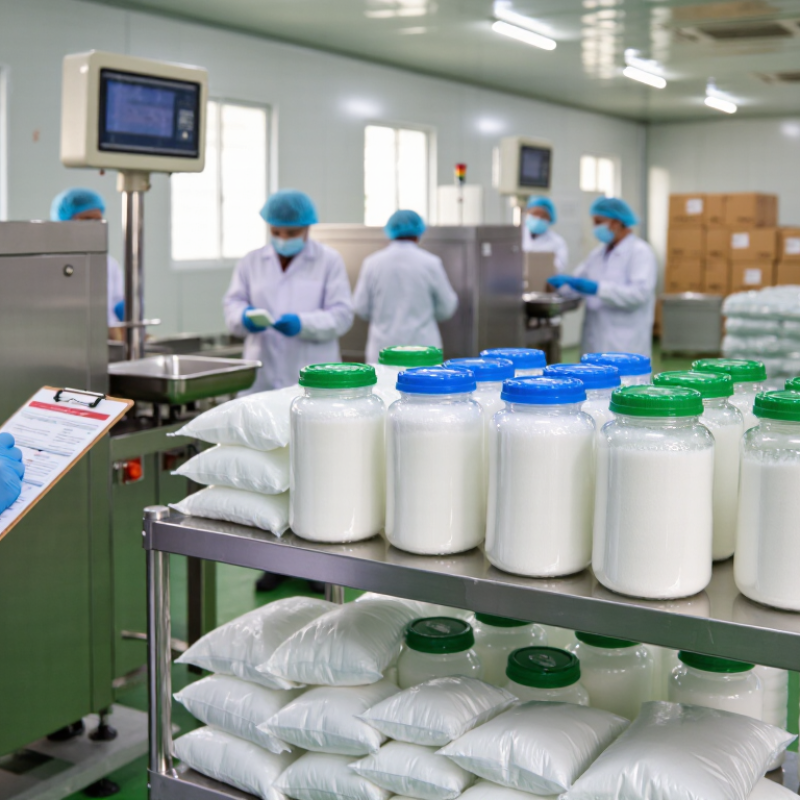
MSG, or monosodium glutamate, is listed as food additive E621. Its molecular formula is C5H8NO4Na, with a molar mass of 187.13 g/mol. In China, commercial MSG is mainly produced through microbial fermentation. Starch, sugar, or other carbohydrate sources feed selected microorganisms in large stainless-steel tanks. The broth then undergoes filtration, neutralization, concentration, crystallization, and drying.

This process resembles amino-acid production more than simple seasoning manufacture. Temperature, pH, dissolved oxygen, and contamination control require continuous monitoring. The crystals should appear clean, dry, and uniform. A small moisture increase can affect flowability during storage. ISO 22000 and HACCP-based controls are commonly used across professional facilities, although certification alone cannot prove consistent product quality.

MarketsandMarkets estimated the global MSG market at approximately US$5.2 billion in 2023, with continued growth projected through 2028. IMARC Group also identifies Asia-Pacific as the leading regional market, supported by food processing and restaurant demand. These reports use different methods, so their figures should not be treated as identical. That matters when comparing Chinese suppliers.

Reliable buyers should request assay results, moisture data, heavy-metal testing, microbiological limits, and traceability records. Fermentation is efficient, but it is not automatically flawless. Poor aeration or weak purification can reduce yield and affect crystal quality. Supplier audits and batch samples remain necessary, even when technical documents look complete.

China’s Global MSG Position: Over Half of World Production Capacity

China Top Monosodium Glutamate Manufacturers and Suppliers

China holds a dominant position in global monosodium glutamate production. Industry assessments from Mordor Intelligence and IMARC commonly place China’s capacity above 50% of the world total. The exact percentage varies between reports. Definitions differ between installed capacity, operating output, and export volume. That distinction matters when comparing suppliers.

Large Chinese production bases often integrate starch processing, fermentation, crystallization, and quality testing. Corn and other agricultural materials enter the process as carbohydrate sources. Microbial fermentation then produces glutamic acid before neutralization and crystallization. This integrated model can reduce transport steps and support consistent batch control. It also creates exposure to energy, crop, and wastewater-treatment costs.

Capacity alone proves little.

Professional buyers should verify annual operating output, food-safety certifications, laboratory records, and export inspection documents. Reports from the Food and Agriculture Organization and China Customs provide useful context on agricultural inputs and trade flows, although neither directly measures every MSG facility. Supplier audits remain necessary. A factory may advertise impressive capacity but operate below it during maintenance or weak demand. Regional logistics also affect delivery reliability, especially during peak agricultural and shipping seasons. China’s scale is clear, but careful due diligence still separates dependable supply from attractive numbers.

Top Chinese Manufacturers Ranked by Annual Capacity and Export Volume

China’s leading monosodium glutamate manufacturers are often ranked by annual production capacity and export volume. Capacity shows industrial strength, but export records reveal stronger international performance. A large facility may produce hundreds of thousands of metric tons yearly, while only a portion reaches overseas markets.

The highest-capacity producers usually operate integrated fermentation plants near corn, tapioca, or other starch supplies. This reduces transport costs and supports steadier raw-material control.

Their export shipments commonly move through major Chinese ports in 25-kilogram bags, 500-kilogram super sacks, or customized food-service packaging. However, capacity figures may reflect designed output, not actual production.

Reliable suppliers should provide batch traceability, laboratory test reports, allergen statements, and clear food-safety documentation. Buyers should also compare moisture, purity, particle size, packaging strength, and delivery performance. Export volume matters, but repeat orders matter more.

Numbers can be imperfect.

Some suppliers publish limited data. Others combine several factories in one figure, making direct ranking difficult. A careful buyer should verify factory ownership, production records, audit results, and shipment history before signing a contract. Annual capacity provides scale; export volume offers practical evidence of market acceptance. Neither measure alone proves consistent quality.

Product Standards: 99% Assay, Food-Grade E621, and 20–60 Mesh Options

China’s leading monoSodium Glutamate manufacturers and suppliers increasingly compete on measurable quality, not price alone. For buyers, Sodium Glutamate should show a minimum 99% assay on a dry basis. This figure is commonly aligned with food-chemical specifications, including the Food Chemicals Codex. However, 99% does not automatically prove clean production or stable flavor performance.

Food-grade E621 refers to monosodium L-glutamate identified as INS 621 under the Codex General Standard for Food Additives. The FAO/WHO JECFA evaluation lists its acceptable daily intake as “not specified,” when used according to good manufacturing practice. Suppliers should provide batch-specific certificates, moisture results, purity testing, and traceability records. Paperwork matters. Yet documents can be incomplete.

Particle size also affects handling. A 20–60 mesh option can support different applications, from fine seasoning blends to larger crystals for industrial mixing. Mesh results should state the testing method and sieve distribution, rather than listing one attractive range. A supplier may report 20 mesh, while most particles actually pass through 60 mesh. That difference changes dust, dissolution speed, and filling accuracy. Buyers should request representative samples, sealed batch numbers, and comparison data from more than one production lot. A specification sheet looks precise, but practical verification remains essential.

Supplier Certifications: GB 2720, FCC, HACCP, ISO 22000, and Halal

China’s monosodium glutamate suppliers are increasingly assessed through documented compliance, not price alone. GB 2720 defines China’s food-safety requirements for monosodium glutamate, including quality indicators and testing controls. FCC standards provide an international identity and purity reference for food ingredients. During a supplier audit, buyers should check batch records, laboratory results, and traceability from fermentation broth to sealed bags.

HACCP focuses on practical hazards, such as contamination during crystallization, drying, and packing. ISO 22000 adds a broader food-safety management system. The ISO Survey reports more than 70,000 ISO 22000 certificates worldwide, showing how widely structured controls are used. Halal certification also requires verified processing aids, sanitation materials, and production segregation. Small details matter. A clean certificate is not enough.

FAO and WHO’s JECFA evaluation places glutamates in the “ADI not specified” category when used under good manufacturing practice. Codex identifies monosodium glutamate as INS 621. These references support responsible use, but they do not replace supplier verification. Buyers should ask whether “Natural Glutamate” claims describe naturally occurring glutamate, fermentation origin, or marketing language. That distinction can be unclear. Experienced purchasers should compare certificate scope, expiry dates, test methods, and facility addresses. Even strong systems can fail through weak document control, so periodic audits remain necessary.

Bulk Purchasing Terms: 25-kg Bags, Container Loads, MOQ, and Lead Time

China Top Monosodium Glutamate Manufacturers and Suppliers

Bulk purchasing requires more than comparing the lowest quoted price. A 25-kg bag is a common handling unit for food ingredient distribution. Buyers should confirm bag material, inner liner, pallet configuration, and net weight tolerance before placing orders. Clear specifications prevent costly repacking problems. Request a current certificate of analysis, production date, shelf-life statement, and food-grade documentation. These records help procurement teams verify consistency across shipments.

Container loads can reduce the unit cost, but only when demand is stable. Confirm whether the supplier calculates a full container by bag count, gross weight, or available loading space. The minimum order quantity may begin at one pallet, while larger suppliers may require a full container. Ask about flexible trial orders. A small mistake here can lock up working capital. Lead time should include production, inspection, export preparation, and port scheduling. Eight to twenty-one days may be realistic for repeat orders, but holidays and raw material changes can extend it.

Tips: Put the MOQ, 25-kg packaging details, lead time, inspection standard, and replacement terms in the purchase contract. Check one pre-shipment sample when the formula or packaging changes. Do not rely only on a sales quotation. It may omit storage conditions, loading limits, or documentation fees. Keep at least a small buffer in your delivery plan. Procurement forecasts are often too optimistic.

Choosing a Chinese MSG Supplier by Quality, Capacity, Traceability, and Price

Choosing a Chinese MSG supplier requires more than comparing quotations. Mordor Intelligence estimates the global MSG market will grow at about 4.8% annually through 2030. Demand is expanding, but supplier quality still varies. Request recent test reports showing assay, moisture, chloride, heavy metals, and microbiological limits. Check whether an accredited laboratory issued them.

Capacity should be verified on the factory floor. Ask for monthly output, production lines, storage conditions, and peak-season lead times. A supplier claiming 10,000 tonnes monthly should show production records and warehouse space. Traceability matters just as much. Under HS code 292242, UN Comtrade data can help compare export activity, but shipment records do not prove product quality. Request batch codes, raw-material records, packaging dates, and recall procedures. Visit if possible.

Price needs careful interpretation. A very low offer may exclude testing, inland transport, stronger packaging, or stable moisture control. Compare the delivered cost per usable tonne. I would also review payment terms and replacement policies. This is where buyers sometimes rush. Market reports use different methods, so their growth estimates are not identical. That uncertainty deserves attention. A practical supplier scorecard can assign weight to quality, capacity, traceability, and price, while leaving room for factory evidence and independent verification.

China Top Monosodium Glutamate Manufacturers and Suppliers - Choosing a Chinese MSG Supplier by Quality, Capacity, Traceability, and Price

Evaluation Dimension Practical Benchmark for Food-Grade MSG Documents or Data to Request How to Assess the Supplier
Product identity Monosodium L-glutamate monohydrate; food additive INS 621; normally supplied as white crystalline granules or powder. Product specification, product label, Safety Data Sheet, and food-additive compliance statement. The product name, grade, additive number, and intended food use should be consistent across all documents.
Assay and purity Food-grade MSG specifications commonly require an assay of not less than 99.0% on a dry basis, subject to the applicable standard and contract specification. Recent Certificate of Analysis, test method, batch number, production date, and laboratory signature. Compare at least three recent batches rather than relying on a single sample or a catalogue specification.
Moisture and physical quality A typical food-grade specification sets loss on drying at no more than 0.5%; crystals should be free-flowing, clean, and free from visible foreign matter. Moisture result, particle-size distribution, visual inspection record, and retained-sample procedure. Check caking after transport simulation and confirm that the agreed particle-size range matches the application.
pH and solution clarity A commonly used specification for a prepared aqueous solution is approximately pH 6.7–7.2, with clear or acceptably transparent appearance. pH test result, solution-clarity requirement, test concentration, and test method. The test concentration and method must be identical when comparing different suppliers.
Contaminant control Heavy metals, lead, arsenic, microbiological limits, and other contaminants must comply with the destination-market food-additive requirements. A commonly referenced international lead limit for MSG is 1 mg/kg maximum. Accredited-laboratory test reports, heavy-metal results, microbiological results, allergen statement, and non-GMO statement where required. Use the strictest applicable requirement among the importing country, customer specification, and recognized food-additive standard.
Food-safety management A documented HACCP-based system is expected; ISO 22000 or FSSC 22000 certification can provide additional evidence of system control. Valid certificates, certification scope, issuing body, audit date, and corrective-action records. Verify that the certificate covers MSG production and the actual manufacturing site, not only trading or office activities.
Traceability Each shipment should be linked to a unique lot number, production date, raw-material records, test results, packaging records, and dispatch information. Sample traceability exercise, lot-code explanation, recall procedure, retained-sample policy, and certificate-to-lot matching. A supplier should be able to trace one finished lot backward and identify all affected customers within a documented target time.
Production capacity Assess verified monthly output, current utilization, storage capacity, packaging-line capacity, and the percentage reserved for contracted customers. Capacity statement, recent production plan, warehouse photographs or audit evidence, and shipment history with sensitive commercial details removed. Do not equate a large advertised capacity with available supply; confirm capacity for the required grade, particle size, and delivery schedule.
Supply continuity A robust supplier should have preventive-maintenance plans, backup utilities where relevant, qualified alternate materials, and a documented business-continuity plan. Business-continuity plan, emergency contact list, contingency stock policy, and historical delivery-performance data. Give preference to suppliers that can explain how they handle equipment shutdowns, quality holds, port delays, and demand surges.
Packaging and storage Common export formats include multi-layer bags, woven sacks with inner liners, or larger bulk packaging; packaging must protect against moisture and contamination. Packaging specification, net-weight tolerance, pallet pattern, container-loading plan, storage conditions, and shelf-life statement. Confirm whether the packaging is suitable for the destination climate and whether the lot code remains readable throughout distribution.
Export and regulatory readiness The supplier should provide export documents and comply with the importing country’s food-additive, labeling, customs, and documentation requirements. Commercial invoice, packing list, certificate of origin, health or sanitary documents where required, and shipping documentation. Check whether the legal exporter, manufacturing site, product description, and lot information are consistent on every document.
Price transparency The quotation should clearly state grade, particle size, packaging, quantity, Incoterm, port, payment terms, validity period, and whether testing or documentation charges are included. Formal quotation, price-validity period, freight basis, packaging cost, inspection cost, and payment schedule. Compare total landed cost rather than unit price alone: product cost + inland freight + export charges + ocean freight + insurance + destination charges + testing.
Sample and approval process A representative pre-shipment sample should be evaluated for appearance, dissolution, taste profile, assay, moisture, and application performance. Sample COA, sample lot number, independent test report, and written approval specification. Approve a defined specification and change-control procedure before placing recurring orders.
Recommended supplier score Quality and food safety: 35%; traceability and compliance: 20%; capacity and continuity: 20%; total landed cost: 15%; service and documentation: 10%. Completed supplier questionnaire, audit report, sample test results, and commercial comparison sheet. Use price as one factor, not the sole decision criterion; reject any supplier that fails mandatory safety or traceability requirements.

Note: Numerical benchmarks should be confirmed against the latest applicable Chinese and destination-market regulations, the buyer’s product specification, and the supplier’s current Certificate of Analysis.

FAQS

Why is a 25-kg bag important in bulk purchasing?

It is a common handling unit. Confirm the bag material, inner liner, pallet layout, net weight, and tolerance.

What documents should buyers request before ordering?

Request a current certificate of analysis, production date, shelf-life statement, and food-grade documentation.

Can container loads always reduce purchasing costs?

No. They help only when demand remains stable and storage is available.

How should buyers confirm container loading calculations?

Ask whether loading depends on bag count, gross weight, or available container space. Small details matter.

What should buyers know about minimum order quantity?

The MOQ may start at one pallet or require a full container. Ask whether trial orders are possible.

How long might repeat orders take?

Production, inspection, export preparation, and port scheduling may take eight to twenty-one days.

What can delay the stated lead time?

Holidays, raw-material changes, inspections, and port congestion can extend delivery. Forecasts are often too optimistic.

How can buyers compare supplier quality?

Review recent tests for assay, moisture, chloride, heavy metals, and microbiological limits. Independent laboratories are preferable.

How can production capacity be checked?

Request monthly output, production-line details, warehouse conditions, and peak-season records. Factory evidence is stronger than promises.

How should traceability be evaluated?

Check batch codes, raw-material records, packaging dates, and recall procedures. Shipment data alone proves little.

Conclusion

China is a leading global source of Monosodium Glutamate (MSG), also known as food additive E621, with a molecular weight of 187.13 g/mol. Its production mainly uses fermentation, allowing manufacturers to achieve large-scale output and consistent quality. Chinese suppliers commonly offer food-grade MSG with an assay of approximately 99%, in particle sizes such as 20–60 mesh, to meet different food-processing requirements. Their products may be manufactured according to standards including GB 2720 and FCC, with certifications such as HACCP, ISO 22000, and Halal available depending on the supplier.

For bulk buyers, key considerations include annual production capacity, export experience, product traceability, testing documentation, and price stability. Standard purchasing options often include 25-kg bags and full-container shipments, while minimum order quantities and lead times vary according to packaging, specifications, and production schedules. A reliable supplier should provide clear quality records, consistent supply, transparent communication, and practical shipping terms. Comparing these factors helps buyers select a suitable Chinese MSG partner for long-term and compliant procurement.
Ethan

Ethan

Ethan is a dedicated professional with a strong expertise in the field of food ingredients and nutritional raw materials sourcing from China. With a keen eye for quality consistency and supply reliability, he plays a pivotal role in supporting global buyers. Ethan's mission aligns perfectly with......
Previous 2026 Top Trehalose Powder Types for Global Buyers?