Get a Quote
Leave Your Message
Describe your specific request*
0%

So, you're trying to pick a reliable D Ribose Powder supplier. Honestly, it's not just about who has the lowest price on a product page. If you're buying globally, you need consistent quality, paperwork that actually makes sense, people who reply, and export support that doesn't fall apart. This guide looks at ten suppliers that might fit different needs—whether you're ordering small lab amounts or need regular commercial supply.

For each one, I tried to focus on things you can actually check: specs, assay info, COAs, batch traceability, manufacturing standards, packaging choices, and MOQs. You'll also want to ask about testing methods, storage, lead times, and whether they can handle international docs. A slick website is nice, sure, but it's not proof.

These companies aren't ranked as the best overall. Their strengths can shift depending on your market, order size, certification needs, and where you're shipping. Some might give better technical support; others might be quicker with quotes or more flexible on packaging. Nobody's perfect. And that matters.

Before you order, ask for recent documents. Double-check that the specs match your intended use and whatever local rules apply. Independent testing can save you from some avoidable headaches too. Little details add up.

This overview is meant to help you compare suppliers with a bit more clarity. It's not a substitute for professional quality assessment or regulatory review. But if you look at each option practically—and a little critically—you can find a D Ribose Powder partner that fits your operations, quality expectations, and longer-term sourcing plans.
Top 10 D Ribose Powder Suppliers for Global Buyers

What Is D-Ribose Powder and Why Do Global Buyers Need Reliable Suppliers?

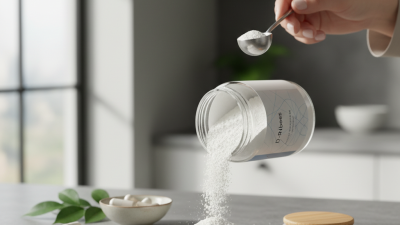
D-ribose is a five-carbon sugar used in the body’s ATP production pathway. ATP supplies energy for cellular work, including muscle contraction and recovery. Its powder form dissolves easily in water and appears in sports nutrition and dietary supplement formulations. Grand View Research valued the global dietary supplements market at about USD 177.5 billion in 2023. That scale increases demand for consistent, traceable ingredients.

Quality still varies. A reliable supplier should provide batch-specific certificates of analysis, identity testing, assay results, microbiological data, and heavy-metal screening. Testing should follow recognized methods, not only internal claims. The United States Pharmacopeia emphasizes documented identity, purity, and contaminant controls for dietary ingredients. HACCP or ISO 22000-based systems also help buyers assess manufacturing discipline. Ask about origin, packaging conditions, shelf-life evidence, and complaint handling.

Small details matter. A sealed inner liner can protect powder from humidity during ocean transport. Clear lot codes support rapid investigation when a shipment differs. Suppliers should explain deviations honestly, even when the answer is inconvenient. No supplier is flawless. Buyers should compare multiple recent batches rather than trust one attractive sample. A 2023 review in Nutrients also noted that clinical evidence for D-ribose remains limited in several applications, so responsible suppliers should avoid exaggerated health claims and provide technically balanced documentation.

How the Top 10 D-Ribose Powder Suppliers Were Selected

The top 10 D Ribose powder suppliers were selected through a documented, evidence-based screening process. Market scale supports this caution: Grand View Research valued the global dietary supplements market at approximately USD 177.5 billion in 2023. Rapid growth can attract inconsistent documentation and inflated claims.

Each supplier was assessed against five practical areas: raw-material identity, batch consistency, testing depth, manufacturing controls, and export readiness. We requested current certificates of analysis, showing assay results, moisture, microbiological limits, and heavy-metal testing. Independent laboratory verification received greater weight than supplier-issued statements alone. ISO’s 2023 Survey reported more than 1.2 million ISO 9001 certificates worldwide, yet certification was treated as supporting evidence, not automatic proof of quality. A certificate alone proves little.

We also reviewed traceability from incoming material to sealed packaging. Clear lot numbers, retained samples, allergen statements, and documented recall procedures improved each supplier’s score. Production capacity and lead-time records mattered because a reliable sample does not guarantee stable commercial supply. Packaging was examined closely, including moisture barriers and pallet protection during ocean freight. Some public information was incomplete. That limitation remains important. Supplier rankings can change after an audit, a failed batch, or a new regulatory review. The final comparison therefore favored transparent records, responsive technical teams, and repeatable test results over polished websites or unusually low quotations.

Supplier Profiles: Products, Manufacturing Capacity, and Market Coverage

Top 10 D Ribose Powder Suppliers for Global Buyers

The ten supplier profiles should be compared through products, capacity, and market coverage. Most offer crystalline D-ribose powder for sports nutrition, clinical nutrition, and Ribose Supplement formulations. Buyers should request food-grade specifications, particle-size data, allergen statements, and recent certificates of analysis. Some suppliers also provide customized mesh sizes, private-label packaging, and blended powder formats.

Manufacturing capacity needs closer inspection. A stated annual output may include several products, not D-ribose alone. Ask for monthly production allocation, reserve capacity, lead times, and backup facilities. Fermentation-based production can support consistent purity, but process controls matter. Check microbial limits, heavy metals, residual solvents, and batch-to-batch assay results. ISO 22000, HACCP, and current GMP systems strengthen supplier credibility, although certificates alone do not prove daily performance.

Market coverage separates capable exporters from attractive listings. Profiles should identify warehouse locations, export regions, minimum order quantities, and documentation support for North America, Europe, and Asia-Pacific. Grand View Research valued the global dietary supplements market at approximately USD 177.5 billion in 2023, showing strong demand for reliable ingredient supply. IMARC Group also reports continued expansion in sports nutrition, where carbohydrate and recovery ingredients remain important. Capacity claims still require verification. A video audit, retained sample, and three-batch quality review can expose gaps before a contract is signed. That step is often skipped. It should not be.

Quality Standards, Certifications, and Testing Practices to Compare

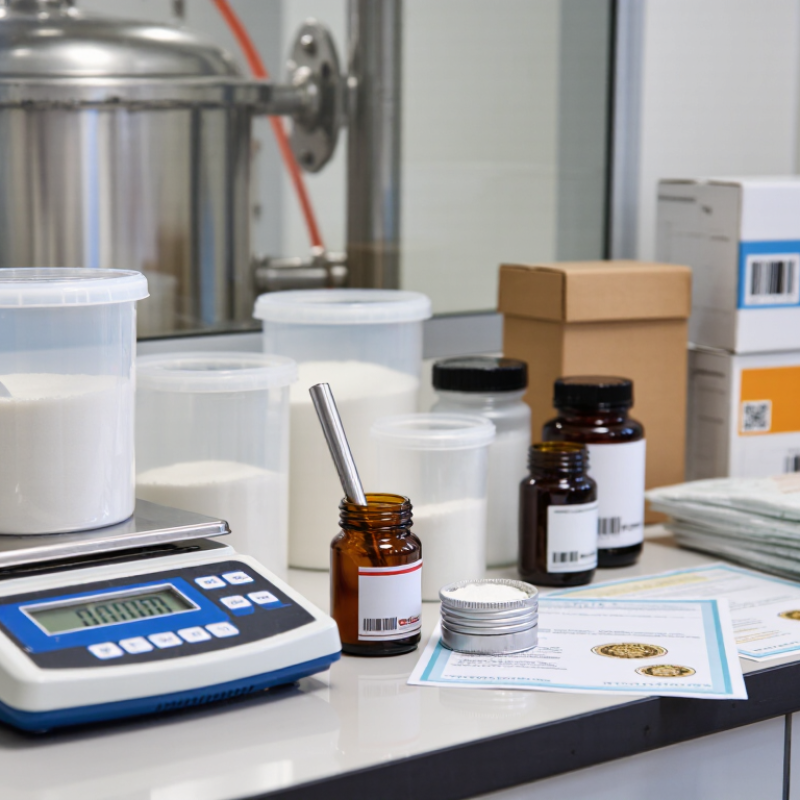
Choosing among the top D-ribose powder suppliers requires more than comparing prices. Start with documented quality standards, such as GMP, ISO 9001, or ISO 22000 certification. Check whether the certificate covers the actual manufacturing site. A certificate alone proves little. Ask for a current certificate of analysis for each production lot. It should show assay, moisture, appearance, and test methods. HPLC results are especially useful for confirming identity and purity.

Reliable suppliers should test for microbial counts, yeast, mold, heavy metals, and residual solvents. Testing should match the product’s intended market and local requirements. Look for independent laboratory reports, not only internal quality records. A traceable lot number should connect the powder to raw materials, production dates, and retained samples. Packaging also matters. Inspect the seal, storage instructions, and transport conditions. Temperature and humidity exposure can affect powder quality. Even strong suppliers may have gaps. This deserves honest review.

Tips: Request three recent lot reports, not one. Compare results across lots. Ask who collected the sample and whether the laboratory is accredited. For Ve Powder listings, clarify the exact ingredient identity and specification before comparing suppliers. Verify allergen statements, country-of-origin records, and change-control procedures. Keep written answers. Verbal assurances are easy to misunderstand. A small sample evaluation can reveal caking, unusual odor, or inconsistent dissolution before a larger purchase.

Top 10 D-Ribose Powder Suppliers: Quality Standards, Certifications, and Testing Practices

Suggested buyer due-diligence weighting for comparing suppliers without ranking or identifying individual companies.

Identity and purity testing should be supported by batch-specific certificates of analysis. Microbiological, heavy-metal, and residual-solvent testing help verify product safety, while GMP, HACCP, ISO 22000 or FSSC 22000, and ISO 9001 documentation helps assess manufacturing and quality-management systems. Actual requirements should be confirmed against the destination market and product use.

Pricing, Minimum Orders, Packaging, and International Shipping Options

Top 10 D-Ribose Powder Suppliers for Global Buyers

Pricing varies with purity, testing, and order volume. Public 2024–2025 B2B quotations commonly place food-grade D-ribose powder near USD 8–18 per kilogram for bulk orders. Small trial quantities can exceed USD 25 per kilogram. That gap matters. Minimum orders often range from 25 kilograms for stock material to 500 kilograms for customized production. Buyers should request assay, moisture, heavy-metal, microbiological, and allergen results before comparing prices. The Global Wellness Institute’s industry reporting continues to show strong consumer interest in functional nutrition, but demand does not replace batch-level verification.

Packaging usually includes 1-kilogram foil bags, 5-kilogram cartons, or 25-kilogram fiber drums with sealed liners. Ask whether the inner bag is food-contact compliant and nitrogen-flushed. It may not be. A supplier offering private labeling should provide artwork proofs, lot coding, shelf-life data, and a retained sample. International freight adds complexity. UNCTAD’s Review of Maritime Transport 2024 states that over 80% of global merchandise trade by volume moves by sea, making ocean freight economical for palletized orders. Air shipping suits urgent samples, but costs rise sharply with volumetric weight. Confirm Incoterms, export documents, HS classification, insurance, and destination duties before payment. Delivery estimates can be optimistic. A realistic plan includes customs delays, port congestion, and independent pre-shipment testing.

How Global Buyers Can Evaluate and Choose the Right Supplier

Choosing a Paba Powder supplier requires more than comparing prices. Global buyers should verify product identity, purity, and production consistency. Request a recent certificate of analysis for each batch. Check testing for heavy metals, microbiological limits, moisture, and active content. The document should show laboratory methods, dates, and batch numbers.

A reliable supplier can explain its manufacturing controls without vague promises. Ask about raw material sourcing, batch traceability, storage temperature, and packaging protection. A sealed, moisture-resistant bag may matter during ocean transport. Review production standards, quality certifications, export experience, and complaint procedures. A polished website is not proof. I have learned that clear records often reveal more than attractive sales language. Supplier evaluation is never perfect, and buyers should question their own assumptions.

Tips: Compare at least three suppliers. Request a small sample before a large order. Confirm whether the sample matches commercial production. Check lead times, minimum order quantities, payment terms, and shipping documents. Ask how delayed or damaged goods are handled. Keep written records of every answer. A low quotation can hide testing gaps, unstable supply, or expensive rework. Also review the supplier’s communication speed. Slow replies before an order may become serious delays later. Choose evidence over confidence.

Top 10 D-Ribose Powder Suppliers for Global Buyers How Global Buyers Can Evaluate and Choose the Right Supplier
Rank Anonymous Supplier Profile Typical Supply Region Product Specification to Request Typical Assay Target Common Order Quantity Indicative Lead Time Standard Packaging Options Quality Documents to Verify Export Capability Best Fit for Buyers Evaluation Score
1 Profile A — Large-Scale Manufacturer Asia-Pacific Food, nutraceutical, or pharmaceutical grade; powder form; full batch traceability ≥99.0% by HPLC 500 kg–2,000 kg 3–6 weeks after artwork and payment approval 20–25 kg fiber drums or cartons with double PE liners COA, SDS, allergen statement, heavy-metal test, microbiological report, GMP evidence Experienced with container and consolidated ocean shipments High-volume international buyers 9.2/10
2 Profile B — Certified Nutraceutical Producer East Asia Food-grade D-ribose with controlled moisture and microbial limits ≥99.0% by validated assay method 100 kg–1,000 kg 4–8 weeks 1 kg samples, 5 kg bags, and 25 kg cartons COA, GMP certificate, ISO certificate, stability information, country-of-origin statement Suitable for regular air and sea freight Sports-nutrition and dietary-supplement brands 9.0/10
3 Profile C — Flexible Private-Label Supplier China and Southeast Asia Bulk ingredient plus custom labeling and repacking capability Usually 98.0%–99.0%; confirm purchase specification 50 kg–500 kg 3–7 weeks Aluminum foil bags, cartons, drums, or finished retail pouches COA, SDS, product specification, packaging declaration, third-party test report Can support smaller export consignments Start-ups and private-label supplement projects 8.6/10
4 Profile D — Pharmaceutical-Grade Contract Supplier Asia-Pacific Higher-control material with documented change control and validated cleaning ≥99.0% with defined impurity limits 250 kg–1,000 kg 6–10 weeks Sealed fiber drums with tamper-evident inner liners GMP documentation, validation summary, impurity profile, audit package, batch records where applicable Strong documentation for regulated markets Pharmaceutical and clinical-nutrition applications 8.9/10
5 Profile E — Regional Distributor with Stock North America or Europe Imported D-ribose powder held in a regional warehouse Commonly listed at ≥99.0%; verify lot-specific COA 25 kg–250 kg 1–3 weeks from local inventory Original manufacturer packaging or distributor-repacked cartons Current COA, SDS, traceability records, import documents, storage statement Fast domestic and regional delivery Buyers prioritizing shorter lead times 8.4/10
6 Profile F — Small-Batch Specialty Supplier Europe or North America Small-volume, high-service supply with application support Typically 98.0%–99.0%; confirm analytical method 5 kg–100 kg 2–6 weeks 1 kg, 5 kg, or 10 kg resealable food-contact bags COA, SDS, allergen statement, non-GMO statement where applicable, microbiological report Primarily parcel and pallet exports Research, pilot production, and niche formulations 8.1/10
7 Profile G — Custom-Blending and Formulation Partner Europe, North America, or Asia D-ribose supplied alone or blended with compatible powdered ingredients Depends on blend specification; pure material often targets ≥99.0% 50 kg–500 kg per formula 5–9 weeks Bulk bags, lined cartons, or finished sachets Blend uniformity data, COA, allergen controls, process flow, packaging specification Suitable for multi-country contract manufacturing Buyers requiring finished or semi-finished products 8.3/10
8 Profile H — Cost-Focused Bulk Exporter Asia-Pacific Standard food-grade powder with price-focused commercial terms Often quoted at ≥98.0%; require a buyer-defined minimum 1,000 kg–5,000 kg 4–8 weeks 25 kg bags, cartons, or fiber drums Lot-specific COA, SDS, heavy-metal report, microbiology report, factory questionnaire Best suited to full-container or consolidated freight Large-volume buyers with strong incoming inspection 7.9/10
9 Profile I — Documentation-First Trading Supplier Europe, Middle East, or Asia Multi-source procurement with emphasis on regulatory paperwork Varies by manufacturing source; confirm before contract 25 kg–500 kg 3–8 weeks depending on source inventory Manufacturer-sealed drums or distributor cartons COA, SDS, country of origin, customs classification, traceability, compliance declarations Useful for buyers needing import support Importers and distributors entering new markets 7.8/10
10 Profile J — Sample-to-Scale Supplier Global sourcing network Low-cost samples followed by scalable bulk supply Confirm by independent testing before scale-up 1 kg samples to 250 kg commercial orders Sample: 3–10 days; bulk: 4–10 weeks Laboratory bags, foil pouches, cartons, or drums Sample COA, commercial-lot COA, SDS, identity test, purity test, microbial results Flexible courier, air-freight, and sea-freight options New buyers conducting qualification trials 7.6/10
Important: The profiles above are anonymous supplier categories rather than named companies or brands. Order quantities, lead times, assay levels, certifications, and documentation requirements are indicative market benchmarks. Buyers should verify each item using a recent lot-specific COA, independent laboratory testing, factory audit, and a signed commercial specification before placing an order.
Recommended supplier-selection priorities: identity and purity testing, microbiological control, heavy-metal limits, GMP or equivalent quality systems, batch traceability, production capacity, export experience, regulatory suitability in the destination market, packaging integrity, payment terms, and total landed cost.

Ginseng Leaf Extract Powder: Benefits, Applications, Quality Standards, and Formulation Considerations

Ginseng Leaf Extract Powder is a versatile botanical ingredient developed for nutraceutical and functional formulations. Ginseng leaves contain naturally occurring phytochemicals, including ginsenosides and antioxidant compounds, which may support products positioned around vitality, daily wellness, and botanical nutrition. Compared with variable raw leaf materials, a standardized extract provides more consistent phytochemical content from batch to batch, helping formulators achieve predictable performance and a uniform product profile.

Its applications include capsules, tablets, powdered drink mixes, sachets, functional beverages, and wellness-focused food products. The powder format supports convenient handling, accurate blending, and flexible dosage design. Depending on the formulation concept, it can be combined with vitamins, minerals, herbal extracts, or flavor systems, while sensory characteristics such as color, aroma, and bitterness should be assessed during development. Solubility, dispersibility, moisture control, and compatibility with other ingredients are also important considerations for finished-product stability.

Quality standards should include botanical identity, controlled extraction parameters, standardized marker content, microbiological testing, heavy-metal screening, pesticide evaluation, and checks for residual solvents where applicable. Clear specifications for moisture, particle size, packaging, and shelf life can further support reliable manufacturing. Selecting a ginseng leaf extract with documented phytochemical consistency and stable quality enables more controlled formulation development and dependable batch-to-batch results.

FAQS

What is D-ribose powder?

D-ribose is a five-carbon sugar involved in the body’s ATP production pathway. It dissolves easily in water. It commonly appears in sports nutrition and dietary supplement formulas.

Why do buyers need reliable D-ribose suppliers?

Consistent ingredients support stable product quality and easier manufacturing. A reliable supplier provides traceable batches and clear technical records. One attractive sample is not enough.

Which documents should buyers request?

Request a recent, batch-specific certificate of analysis. It should include identity, assay, moisture, microbiological results, and heavy-metal testing. Check laboratory methods, test dates, and lot numbers.

How can buyers check manufacturing quality?

Ask about documented quality systems and recognized testing methods. HACCP or ISO-based controls may show organized manufacturing practices. Do not rely on vague promises.

What packaging protects D-ribose during shipping?

A sealed inner liner can reduce moisture exposure. This matters during long ocean transport. Check outer packaging, storage temperature, and humidity controls.

Should buyers compare multiple suppliers?

Yes. Compare at least three suppliers and several recent batches. Request a small sample before placing a large order. Confirm that the sample matches commercial production.

Which commercial details require attention?

Confirm lead times, minimum order quantities, payment terms, and shipping documents. Ask how delayed, damaged, or different goods are handled. Record every answer in writing.

What health claims should suppliers make about D-ribose?

Suppliers should use technically balanced information and avoid exaggerated claims. Evidence remains limited for several applications. A perfect supplier does not exist. Buyers should question their own assumptions, too.

Conclusion

D Ribose Powder is a specialized carbohydrate ingredient used in nutrition, sports, and wellness applications, making dependable sourcing essential for global buyers. This guide explains why supplier reliability matters and outlines a practical method for comparing leading suppliers without focusing on any specific brand. The selection criteria include product consistency, manufacturing capacity, export experience, market coverage, and the ability to support different order volumes and application requirements.

Buyers will also learn how to compare quality systems, certifications, laboratory testing, traceability, and documentation. Additional considerations include pricing, minimum order quantities, packaging formats, storage conditions, lead times, and international shipping arrangements. By reviewing these factors together, purchasing teams can assess supplier transparency, communication, production stability, and overall value. The goal is to help global buyers choose a suitable D Ribose Powder supplier that can provide consistent quality, clear commercial terms, dependable logistics, and long-term cooperation.

Liam

Liam

Liam is a dedicated marketing professional with a profound expertise in food ingredients and nutritional raw materials. With a passion for quality and reliability, he plays a pivotal role in connecting global buyers with top-tier products sourced from China. Liam's commitment to excellence is......
Previous China Top 10 Amino Complex Manufacturers for Global Buyers