Leave Your Message
Picking the right China Amino Complex supplier? Honestly, it’s not just about comparing price lists. You’ve got to think about what the product is actually for, who you’re selling it to, the dosage format, and the quality level you expect. And here’s a good question to ask: does the supplier really understand your application—or do they just know the ingredient name? If a manufacturer is serious, they should give you clear specs, recent Certificates of Analysis, batch ID, and traceability records. Independent testing can help confirm identity, purity, micro limits, heavy metals, and allergen claims. Honestly, the little things matter. A sealed sample, a label you can actually read, and powder that flows consistently? Those can tell you a lot about how disciplined their process is. Not that they prove everything, of course.
Honestly, a lot of what you learn about a supplier comes from seeing how they handle pressure. So it's worth digging into things like their manufacturing credentials, quality systems, how ready they are for audits, storage conditions, and export paperwork. If you can, ask for a video audit—or have someone qualified go visit the facility for you. And don't just trust a great sample: compare pilot samples with actual production batches. Before you sign anything, talk through minimum order quantities, lead times, packaging, change control, and how they deal with complaints. Communication really matters when a shipment is late or a spec changes. Some suppliers might reply fast, but they dodge giving you precise evidence. That's a red flag. And a lower price? It can hide gaps in testing, unstable sourcing, or rework that ends up costing you more. Even seasoned buyers can miss these things. So keep a written evaluation record—and get quality, regulatory, and purchasing teams involved. Honestly, the right partner will be upfront about what they can and can't do, help you verify things for yourself, and keep Amino Complex quality steady over the long haul.
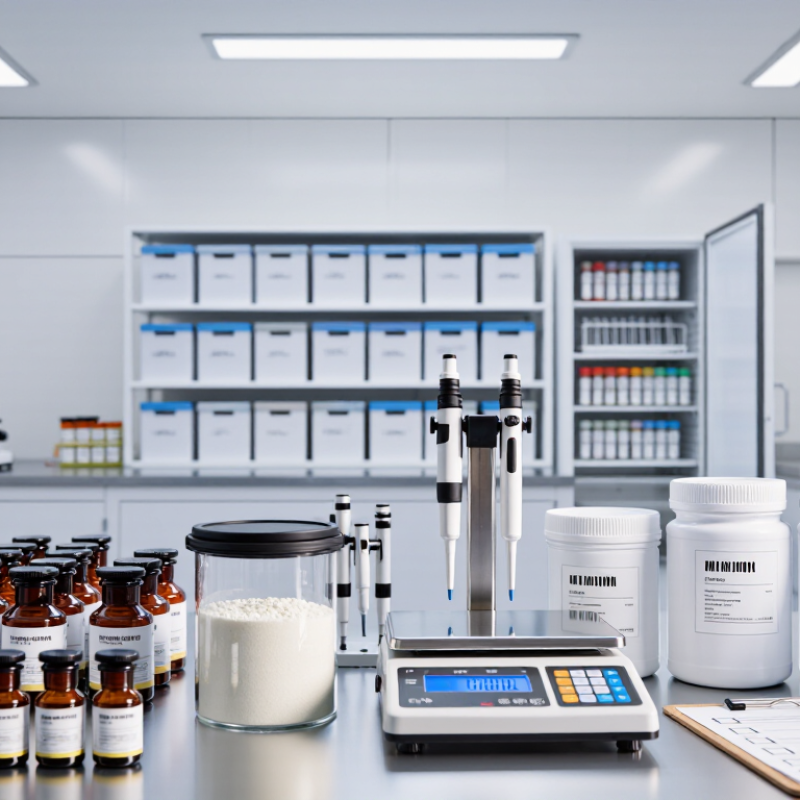
Before comparing suppliers, define exactly what your Amino Acid Complex must contain. List each amino acid, its target amount, ratio, and preferred form. Free-form and peptide-bound ingredients may behave differently during testing and production. Specify the intended application, serving size, flavor expectations, and daily use conditions. For example, a powder may require easy mixing in 250 milliliters of water. A capsule needs different density and filling limits.
Set quality requirements before discussing price. State acceptable purity, moisture, heavy metal limits, microbiological standards, and allergen controls. Ask whether each batch needs independent laboratory verification. Include required documents, such as a specification sheet, certificate of analysis, origin statement, and traceability records. Small details matter. Think about packaging too. A moisture barrier may protect powder during long storage. Your target quantity, sample size, lead time, and minimum order should also be written clearly.
My early specifications were too general, and supplier quotations became difficult to compare. That was a useful mistake. Now, I separate essential requirements from flexible preferences. The formulation may need a small pilot batch before full production. Request stability data under realistic conditions, including heat and humidity exposure. Check whether testing methods match the claimed specifications. Clear requirements help reveal a supplier’s technical discipline, not just its sales language. Leave room for review when taste, solubility, or cost changes during development.
| Requirement Dimension | Recommended Product Definition | Practical Acceptance Criteria | Verification Method or Document | Why It Matters When Selecting a Supplier |
|---|---|---|---|---|
| Intended application | Define whether the amino complex is intended for food, sports nutrition, dietary supplements, clinical nutrition, cosmetics, or research use. | Application, target consumer, serving size, and applicable destination-market regulations are documented before quotation. | Product requirement specification and regulatory review checklist. | The required purity, testing, labeling, and manufacturing controls vary by application and market. |
| Amino acid composition | List every amino acid and its target amount per serving, including essential, conditionally essential, and non-essential amino acids where applicable. | Each component has a defined name, form, target percentage, permitted tolerance, and total blend weight. | Formula sheet, batch manufacturing record, and finished-product certificate of analysis. | A clearly defined composition prevents substitution, under-dosing, and inconsistent quotations. |
| Chemical form | Specify free-form amino acids, peptide-bound ingredients, or salts such as hydrochloride or acetate when relevant. | The chemical form, molecular weight basis, hydration state, and calculation basis are consistent across the specification and label. | Raw-material specification, identity test, and technical data sheet. | Different forms can have different assay calculations, solubility, taste, and labeling requirements. |
| Assay and purity | Set a separate assay specification for each amino acid rather than relying only on the total blend weight. | A common starting point for many high-purity raw amino acids is an assay target around 98.0% or higher, subject to the official monograph and product use. | Validated HPLC, ion-exchange, or other suitable quantitative method reported on the certificate of analysis. | Assay results confirm that the declared active amount is supported by measured data. |
| Identity confirmation | Require a scientifically appropriate identity test for every critical amino acid and the finished blend. | Identity results must match the approved reference standard or pharmacopeial requirement. | Chromatographic retention time, infrared spectrum, optical rotation, or another validated identity method. | Identity testing helps detect incorrect or substituted raw materials before blending and shipment. |
| Stereochemical form | Specify the required L-form, D-form, or racemic form for each amino acid where stereochemistry is relevant. | The specified stereochemical form is confirmed and unwanted isomers remain within the agreed limit. | Chiral chromatography, optical rotation, or an applicable compendial method. | The isomeric form can affect product identity, regulatory status, and technical performance. |
| Moisture and physical form | Define powder or granule form, particle-size range, bulk density, flowability, and moisture or loss-on-drying limit. | Use a product-specific moisture limit, commonly established during formulation and stability studies; no visible caking or foreign particles. | Loss-on-drying or Karl Fischer test, sieve analysis, bulk-density test, and visual inspection. | Physical properties influence blending uniformity, filling accuracy, dissolution, and shelf life. |
| Microbiological quality | Define total aerobic microbial count, total yeast and mold count, and absence or limits for specified pathogens based on intended use. | Limits must follow the applicable food, supplement, pharmaceutical, or customer specification; pathogen requirements should be explicitly listed. | Microbiological certificate of analysis from a qualified laboratory. | Amino acid powders can be exposed to environmental contamination during processing, filling, or storage. |
| Heavy metals and elemental impurities | Include lead, arsenic, cadmium, and mercury, with additional elements assessed when required by the risk evaluation. | Limits should be based on the destination-market regulation, daily intake, and intended consumer exposure rather than a universal value. | ICP-MS or ICP-OES test report from a qualified laboratory. | Elemental impurities may originate from raw materials, water, equipment, or environmental sources. |
| Residual solvents and contaminants | Identify the manufacturing route and assess residual solvents, allergens, pesticides, mycotoxins, and other process-related contaminants where relevant. | Each contaminant is either tested or scientifically justified as not applicable, with limits linked to the relevant regulation. | Risk assessment, supplier declarations, GC testing, and contaminant-specific laboratory reports. | Risk-based testing is more reliable than using the same checklist for every amino acid. |
| Solubility, taste, and sensory profile | Record water solubility, pH behavior, color, odor, bitterness, and any need for flavor masking or granulation. | Define test conditions such as temperature, water-to-powder ratio, mixing time, and acceptable sensory range. | Prototype sample evaluation, sensory panel record, and physical-performance test report. | A chemically compliant blend may still fail if it is difficult to dissolve or unsuitable for the final dosage form. |
| Manufacturing and quality system | Require documented controls for raw-material approval, weighing, blending, cleaning, deviation handling, change control, and batch release. | The supplier can provide current quality certificates and an auditable quality-management system appropriate to the product category. | Quality manual, audit questionnaire, manufacturing license where applicable, and relevant certification copies. | Documented systems support consistent production and traceable corrective action. |
| Batch consistency and traceability | Define batch size, lot coding, retention-sample policy, blending-uniformity expectations, and full raw-material traceability. | Each finished lot can be traced to its component lots, production records, test results, and release decision. | Traceability exercise, batch records, retention-sample procedure, and certificate of analysis. | Traceability reduces recall risk and makes quality investigations faster and more accurate. |
| Packaging and storage | Specify food-contact suitability, moisture and oxygen barrier needs, container size, inner liner, tamper evidence, and pallet configuration. | Packaging protects the powder under the defined storage condition, with clear lot number, net weight, and expiry or retest information. | Packaging specification, artwork approval, storage statement, and transport qualification where required. | Moisture, heat, oxygen, and light can affect powder flow, stability, and product appearance. |
| Shelf life and stability | Define proposed shelf life, retest period, storage temperature, humidity conditions, and stability-indicating tests. | Stability data should support the proposed period in the intended packaging; acceptance limits should cover assay, moisture, appearance, and microbiology where applicable. | Accelerated and/or real-time stability report with test intervals and results. | Shelf-life evidence helps prevent degradation, caking, or out-of-specification results during distribution. |
| Minimum order quantity and sampling | Request laboratory samples, pilot quantities, and commercial-batch quantities before approving a long-term supply arrangement. | Samples represent the intended manufacturing process and include a matching lot number and certificate of analysis. | Sample request form, sample COA, pilot-batch report, and quotation with MOQ and lead time. | Sampling reveals differences in taste, flow, dissolution, and consistency before commercial commitment. |
| Regulatory and export documentation | Define the required documents for import, customs, labeling, product registration, and customer qualification in the destination market. | Documents are current, internally consistent, signed or stamped where required, and match the shipped product and lot. | Specification, COA, safety data sheet, origin documentation, allergen statement, non-GMO statement, and regulatory declarations as applicable. | Complete documentation reduces customs delays and supports a smoother customer or authority review. |
Request equipment lists, batch sizes, drying methods, packaging lines, and backup utility details. Ask how peak demand affects lead times. Review three recent production records. A polished tour is not enough.
Check certification scope, audit dates, and the exact production site. Review documented procedures for supplier approval, deviations, and process changes. Ask for controlled records and defined sample-retention conditions. Certificates alone prove little.
It should cover identity, assay, microbiology, heavy metals, and residual solvents. Request test methods and acceptance limits. A vague laboratory statement is too thin. Independent testing adds useful evidence.
Ask the supplier to trace finished bags back to raw-material lots. The process should work within hours, not several days. Test one selected lot during an audit. Paper trails can fail.
Ask for purity, particle size, packaging material, shelf life, and storage conditions. Request a sealed sample with its lot number and production date. Matching documentation matters. Small details expose weak control.
Compare appearance, odor, solubility, and test results with your requirements. Use independent testing for identity, purity, contaminants, microbiology, and allergens. One successful sample does not prove consistency. A good sample can mislead.
Request a named contact, response targets, and an escalation path. Strong answers include measurable limits, test methods, and responsible departments. Vague replies may signal hidden problems. Short is not always reassuring.
Discuss change notifications, stability support, audits, corrective actions, and export documents. Confirm minimum orders, forecast flexibility, payment terms, and complaint handling. Use a trial order to measure documents, pallets, replies, and delivery. My judgment can still be wrong.
Choosing the right China Amino Complex supplier requires a structured evaluation rather than relying on price alone. Start by defining your product requirements, including the intended application, ingredient profile, dosage form, quality standards, packaging, and target market. Then identify qualified suppliers with relevant experience, stable manufacturing capacity, modern facilities, and reliable quality management systems. Reviewing production processes, quality controls, and supply continuity can help reduce potential risks.
Before making a decision, verify certifications, laboratory testing procedures, traceability, and compliance with the regulations of your target market. Compare formulas, pricing, minimum order quantities, production timelines, and shipping arrangements to understand the total value of each offer. Request samples and assess their consistency, documentation, and performance. Clear communication, timely responses, technical support, and willingness to develop customized solutions are also important indicators of a dependable long-term partner. A careful, evidence-based selection process can help you build a stable supply chain and achieve consistent Amino Complex product quality.