Leave Your Message
China's really become a go-to place for sourcing Plant Extracts. They've got tons of agricultural resources and mature processing capabilities, which is a big deal. But, when buyers are shopping around, they're often doing more than just looking at the product variety. They also want to dig into things like extraction methods, botanical ID, testing procedures, documentation, and export experience — all important stuff.
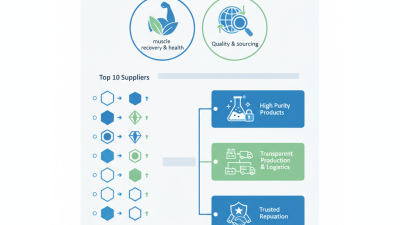
In this guide, I’m introducing you to ten notable Chinese manufacturers that are worth considering for your international sourcing. It's not just about what's on the surface; I focus on practical worries like standard extracts, powder consistency, solvent controls, microbiological testing, and how well you can trace each batch. Basically, a supplier you can trust should be able to give you a clear specs sheet, a certificate of analysis, samples if needed, and steady communication. Because, at the end of the day, details matter.
I also look at their manufacturing facilities, quality certifications, research capabilities, and how much experience they have with private labels or bulk orders. Just a heads up though — always verify this info directly, since certifications and production abilities can change over time. That’s something to keep in mind.
Some manufacturers might lure you with pretty competitive prices but lack solid technical documentation. Others might offer great lab support but demand higher minimum orders. When you’re shopping around, ask for recent test reports, double-check the Latin plant name, and verify that the active compounds listed match the actual testing results. And don’t just judge based on a slick website — real verification is key.
These companies each have their strengths, whether it's herbal powders, standardized ingredients, functional foods, cosmetics, or nutraceuticals. Which one is right for you depends on your market, compliance needs, packaging, and how much you're planning to buy.
Remember, this list is just a starting point — it’s not an end-all. You really should do your due diligence before sealing any deals. A small trial order can teach you way more than just a fancy sales pitch, so don’t skip that step.
A leading plant extract manufacturer in China is defined by more than production capacity. Buyers should examine raw material traceability, extraction control, testing depth, and communication quality. Reliable manufacturers record the plant source, harvest region, extraction solvent, drying temperature, and batch number. These details matter when a powder must perform consistently in capsules, beverages, or laboratory formulations.
Technical evidence should come before attractive claims. Request a current certificate of analysis, specification sheet, microbiological results, heavy metal testing, and stability information. For products such as Pine Bark Extract, Pine Bark Extracts, or Pine Bark Extract Powder, ask how active compounds are identified and standardized. A dependable Pine Bark Extract Supplier should explain sampling methods and retain reference samples. Clear answers build trust. Vague answers do not.
Tips: Compare three batches, not one. Check packaging seals, moisture control, lead times, and document dates. Ask whether the manufacturer can support your target market’s requirements. A Pine Bark Extract Supplement may need different documentation from a raw ingredient order. Factory visits, video audits, and independent testing can reveal practical weaknesses. No supplier is perfect. Even strong facilities may have delays, incomplete files, or inconsistent communication. What matters is whether problems are disclosed, investigated, and corrected with evidence.
| No. | Buyer Evaluation Dimension | Reliable Industry Benchmark | Evidence Buyers Should Request | Why It Matters |
|---|---|---|---|---|
| 1 | Botanical Identification | Correct Latin binomial name, plant part, country or region of origin, and authenticated raw material documentation. | Botanical certificate, supplier qualification records, macroscopic or microscopic identification, and voucher-specimen information where applicable. | Accurate identity reduces the risk of adulteration, substitution, and inconsistent active-compound content. |
| 2 | Extraction Technology | Process selection matched to the plant matrix, such as water, ethanol-water, or other permitted food-grade extraction systems. | Process flow chart, solvent specifications, temperature controls, concentration parameters, and solvent-residue testing procedures. | Controlled extraction improves reproducibility while helping protect heat-sensitive or oxidation-sensitive compounds. |
| 3 | Standardization Capability | Clear marker-compound or active-compound specification supported by a validated analytical method, commonly HPLC, UV-Vis, GC, or TLC depending on the extract. | Product specification, representative certificate of analysis, test method, assay range, and reference-standard information. | Standardization enables predictable performance across production batches and simplifies formulation control. |
| 4 | Contaminant Control | Routine testing for heavy metals, pesticides, microorganisms, aflatoxins where relevant, residual solvents, and other product-specific contaminants. | Recent laboratory reports, testing frequency, acceptance limits, and details of internal or qualified third-party laboratories. | Plant materials can accumulate environmental contaminants, so a documented control program is essential for product safety. |
| 5 | Food-Safety Management | Documented systems based on HACCP, GMP, ISO 22000, or equivalent food-safety principles appropriate to the target market. | Valid certificates, audit summaries, corrective-action records, sanitation procedures, and employee-training documentation. | A structured food-safety system lowers operational risk and supports qualification by international buyers. |
| 6 | Traceability and Supply Chain | Traceability from incoming agricultural or botanical materials through extraction, drying, blending, packaging, and shipment. | Batch-number system, raw-material records, supplier audits, recall procedure, and sample-retention policy. | Full traceability allows faster investigation and recall if a quality issue is discovered. |
| 7 | Stability and Shelf-Life Data | Packaging and storage recommendations supported by stability observations under defined temperature, humidity, and light conditions. | Stability protocol, testing intervals, moisture data, appearance records, assay results, and proposed shelf life. | Plant extracts may be affected by moisture, oxygen, heat, and light; stability data helps protect quality during storage and transport. |
| 8 | Customization and Formulation Support | Ability to provide different extract ratios, marker levels, carriers, particle sizes, delivery forms, and documentation packages. | Technical questionnaire, pilot-batch procedure, sample-development timeline, formulation support scope, and minimum order terms. | Customization helps buyers match the extract with capsules, tablets, beverages, food products, cosmetics, or other applications. |
| 9 | Production and Quality Consistency | Defined batch records, in-process controls, calibrated equipment, controlled drying, and documented deviation management. | Manufacturing capacity statement, batch records, equipment-calibration files, quality-release procedure, and historical batch data. | Consistent manufacturing is more important than a single successful sample when buyers require repeat supply. |
| 10 | Export and Regulatory Documentation | Product documents adapted to the destination market, including specification sheets, certificates of analysis, allergen statements, non-GMO statements where applicable, and regulatory declarations. | Document checklist, export history by market, customs classification support, product labels, and response time for technical inquiries. | Complete documentation reduces customs delays, shortens customer approval cycles, and supports compliant product registration. |
Bacopa monnieri extract powder is gaining attention within the nutraceutical sector as manufacturers explore botanical ingredients for modern dietary supplements and functional products. Industry research reports, including analyses from Grand View Research and MarketsandMarkets, reflect growing interest in plant-based wellness solutions, standardized extracts, clean-label formulations, and convenient powder formats. These trends are encouraging product developers to seek dependable botanical materials that can be incorporated into capsules, tablets, drink mixes, and other supplement applications with consistent processing performance.
Our premium Bacopa monnieri botanical extract is sourced from reliable suppliers in China and produced for nutraceutical and functional product development. Manufactured in a state-of-the-art factory, the extract is designed to provide stable composition and consistent quality across production batches. Its powder format supports efficient handling, blending, and formulation, while its compatibility with modern supplement manufacturing processes helps streamline product development. Suitable for businesses seeking a practical botanical ingredient, this extract can be evaluated for use in wellness-focused formulations that meet current market preferences for traceable sourcing, dependable specifications, and convenient delivery formats.
: Verify plant origin, harvest season, extraction solvent, batch yield, and traceability records. Ask for recent certificates of analysis. Check purity, marker compounds, heavy metals, pesticides, microbes, and residual solvents.
No. High production volume does not guarantee consistent quality. A clean floor helps, but proves little alone. Compare three recent batches for color, odor, particle size, packaging, and test variation.
Look for GMP, HACCP, and ISO 22000 systems. Confirm that each certificate matches the actual production site. Certificates can expire or become outdated, so review current documents.
Ask whether the technical team can adjust concentration, flavor, color, and dosage format. Request a small pilot batch before commercial production. It may reveal poor flow, excess moisture, unpleasant taste, or filling problems.
Confirm packaging material safety, sealing performance, label accuracy, and storage conditions. Review digital artwork proofs carefully. One misplaced decimal can create serious confusion.
Ask whether an independent laboratory tested the product. Review the testing method, marker percentage, and sample batch number. A polished PDF is not proof.
Look for labeled drums, stainless-steel equipment, quarantine areas, and environmental controls. Check whether production records match the supplied samples. Video audits help, but remain limited.
Confirm minimum order quantity, production lead time, storage requirements, sample procedures, and packaging options. Request written change-control procedures. Suppliers should notify buyers before raw materials or processes change.
Stability testing shows how heat and humidity may affect the product over time. Ask for realistic storage data, not only ideal laboratory results. Some samples look excellent initially.
Rankings provide a starting point, not a final decision. They may hide differences in specialization, documentation, compliance, and customer support. Repeated evidence matters more than confident promises.
China has become a major sourcing destination for Plant Extracts, offering buyers a broad range of botanical ingredients, manufacturing capabilities, and supply options. A leading manufacturer is defined by consistent raw material sourcing, scientific extraction methods, reliable quality control, transparent documentation, and the ability to meet international manufacturing standards. Buyers should evaluate suppliers based on product purity, testing procedures, certifications, production capacity, traceability, and experience serving different industries.
The top Chinese manufacturers for buyers typically provide flexible solutions, including custom formulations, tailored concentrations, packaging choices, and private label support. However, selecting the right partner requires more than comparing prices. Buyers should review samples, technical specifications, certificates, audit records, lead times, communication quality, and after-sales service. A dependable manufacturer should also understand import requirements and help ensure that products are properly documented and suitable for the buyer’s target market. By taking a systematic approach, buyers can establish a stable, transparent, and mutually beneficial supply relationship.