By 2026, Nicotinamide Powder isn’t really a single, interchangeable ingredient anymore. Buyers are now comparing pharmaceutical-grade, food-grade, cosmetic-grade, and micronized forms. And each one gives you a different mix of purity, particle size, solubility, certification, and cost. Pick the wrong type, and you might run into clumping, uneven blending, or manufacturing losses you didn’t need.
Demand? It still looks strong. Grand View Research points to cosmetics, dietary supplements, pharmaceuticals, and animal nutrition as key application areas for the broader niacinamide market. IMARC Group also reports continued growth, helped along by skincare innovation and vitamin-enriched products. But here’s the catch: those reports often lump several grades and applications together. So direct comparisons can be a bit imperfect. A growing market doesn’t automatically mean every powder type performs the same.
Dr. Zoe Diana Draelos, a well-known dermatologist and cosmetic science educator, has called niacinamide “a water-soluble form of vitamin B3.” That simple detail matters when you’re formulating. Pharmaceutical-grade powder may fit strict purity requirements, while cosmetic-grade material can offer more commercial flexibility. Food-grade material, on the other hand, needs careful attention to food standards and dosage controls. Honestly, the specs tell the real story. Before choosing, check assay, moisture, heavy metals, microbiological limits, particle distribution, and supplier traceability. A cheaper powder can get expensive fast after failed batches, poor dispersion, or repeated testing.
My own view is cautious: there’s no universally best Nicotinamide Powder. The best option depends on your final product, your processing method, your compliance needs, and the evidence behind each specification. Some purchasing decisions still lean way too heavily on price. That’s something worth rethinking.

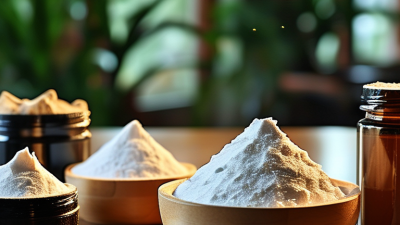
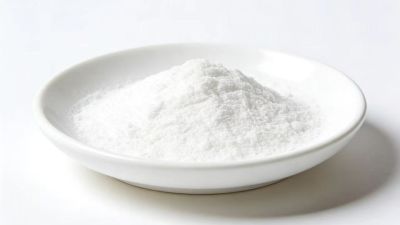
Nicotinamide powder is a water-soluble form of vitamin B3, also called niacinamide. It differs from niacin because it usually does not cause the same flushing sensation. Manufacturers use it in dietary supplements, skincare products, and some pharmaceutical preparations. Its fine, white appearance resembles flour, but its performance depends on purity, particle size, moisture, and storage conditions.
Nicotamide Usp generally refers to material tested against United States Pharmacopeia standards. USP quality can support identity, strength, and impurity control, but buyers should review the current certificate of analysis. The label alone is not enough.
In skincare, formulators dissolve the powder in the water phase and control concentration, pH, and heat. In supplements, accurate weighing and suitable packaging help maintain consistency. Moisture can cause clumping.
The best type depends on its intended use. Cosmetic-grade material may suit a serum, while pharmaceutical or supplement applications require stricter documentation. A product that looks clean may still need laboratory verification. That detail is easy to overlook.
Storage in a cool, dry, sealed container remains practical. Users should also follow regional regulations and seek professional advice when applying concentrated ingredients to sensitive skin or health products. Formulation results can vary, so small-scale testing is wiser than assuming every powder behaves identically.
The main types of nicotinamide powder differ by intended use, testing standards, and particle design. Pharmaceutical-grade powder usually has strict purity limits, controlled impurities, and documented batch testing. It may suit tablets, capsules, or regulated formulations. Food-grade nicotinamide is designed for nutritional products. Its specifications often focus on identity, purity, and contaminant control.
Cosmetic-grade powder is commonly selected for creams, serums, and lotions. Fine particles can disperse more easily, but particle size does not guarantee better skin performance.
Feed-grade powder is intended for animal nutrition. It follows different quality requirements and should not be exchanged casually with human-use materials.
Micronized powder is another option. It has smaller particles, which may improve mixing, although the final benefit depends on the formula.
In practical purchasing, I would not call one type universally best. Check the certificate of analysis, assay value, moisture, heavy metals, microbial limits, and production date. A reliable supplier should provide traceable documentation and clear storage instructions. Pharmaceutical or food applications may require recognized monographs and quality systems.
Cosmetic users should also examine solubility and compatibility with the finished formula. The label alone is not enough. I have seen buyers focus on purity while overlooking clumping during storage. That mistake can affect weighing and blending.
Nicotinamide remains the same active compound, but grade selection changes confidence, handling, and suitability.
Nicotinamide powders differ by grade, particle size, purity, and intended use. Food-grade powder suits carefully controlled nutritional formulations. Cosmetic-grade powder may work for external products, but its testing requirements can differ. Pharmaceutical-grade material usually offers tighter specifications and stronger batch documentation. Grade alone does not prove superiority.
Particle size changes handling more than chemical activity. Fine powder disperses quickly in water, yet it can create dust and clump near humidity. Granulated powder feels easier to measure and produces less airborne material. Micronized powder may improve texture in certain formulations, but the benefit depends on the complete formula. Smaller is not automatically better.
A reliable comparison starts with the certificate of analysis. Check identity, assay, impurities, moisture, microbial limits, and batch number. Packaging also matters. Sealed, light-resistant containers help protect powder during storage. I would not choose from appearance alone; bright white powder can still lack strong documentation. In practice, the best type matches the application, testing standard, and handling process. Personal preference can mislead here. A powder that dissolves beautifully may still be unsuitable for a regulated formulation. Always review current technical and safety requirements before use.
Choosing the best nicotinamide powder starts with its intended use, not its appearance. Cosmetic, food, and laboratory applications may require different specifications. The WHO/FAO report recommends about 14–16 mg niacin equivalents daily for most adults. This figure does not determine powder quality, but it helps prevent careless dose comparisons. A bright white powder can still contain excess moisture, impurities, or unstable particles.
Check the certificate of analysis carefully. It should show assay, moisture, residual solvents, heavy metals, and microbial results. A 99% assay alone is not enough. USP General Chapters and provide recognized approaches for microbial testing. Testing should come from an ISO/IEC 17025-accredited laboratory, when available. Confirm the batch number, test date, and analytical method. Details matter.
Particle size also affects mixing and dissolution. Fine particles may disperse quickly, yet they can create dust and absorb moisture faster. I would compare sieve data, not vague claims like “instant soluble.” Packaging should use a tight moisture barrier, especially in humid storage areas. Review stability data at realistic temperatures. Some suppliers provide impressive purity figures but limited long-term evidence. That gap deserves attention. The best choice is the powder with transparent documentation, consistent batches, suitable particle behavior, and controlled storage—not simply the highest advertised percentage.
| Powder Type | Typical Use | Common Particle-Size Profile | Typical Assay Target | Main Advantages | Key Limitations | Best Choice When... |
|---|---|---|---|---|---|---|
| Standard Crystalline Powder | General formulation, laboratory work, oral solid dosage development | Usually a broad distribution; often approximately 80–300 µm, depending on milling and sieving | Commonly ≥99.0% on an anhydrous basis | Good balance of purity, cost, handling, and storage stability | May disperse more slowly than micronized material; can show variable flow in high-speed equipment | You need a versatile, economical powder for general-purpose formulation |
| Micronized Nicotinamide Powder | Fine-particle blends, rapid-dispersion products, topical formulations requiring a smoother texture | Often D90 below approximately 50–75 µm; exact distribution is supplier-dependent | Commonly ≥99.0% on an anhydrous basis | Greater surface area and improved dispersion potential; can provide a less gritty feel | More prone to dusting, electrostatic charging, agglomeration, and moisture-related handling issues | Particle size and fast dispersion are more important than the lowest processing cost |
| Granulated or Agglomerated Powder | Tablet and capsule manufacturing, powder blends, automated filling processes | Granules commonly range from approximately 150–1,000 µm | Usually specified by the finished material specification; verify the certificate of analysis | Improved flowability, reduced dust, and better feeding performance in production equipment | May require an additional granulation step; larger granules can dissolve or disperse more slowly | Reliable flow, low dust, and consistent machine feeding are the main priorities |
| Pharmaceutical-Grade Powder | Medicinal products and regulated dosage forms | Not fixed; selected according to the applicable monograph and manufacturing process | Must comply with the relevant pharmacopoeial monograph or approved specification | Stronger control of identity, purity, impurities, microbiological quality, and documentation | Higher qualification and documentation requirements; usually more expensive than non-pharmaceutical material | The powder will be used in a regulated pharmaceutical product |
| Food- or Nutrition-Grade Powder | Fortified foods, beverages, dietary supplements, and premixes where legally permitted | Usually selected for blend uniformity and handling; particle size varies by application | Must meet the applicable food or supplement specification and legal requirements | Suitable documentation for food-chain use and compatibility with premix manufacturing | Permitted uses, labeling rules, maximum levels, and testing requirements vary by jurisdiction | The ingredient is intended for a food or dietary-supplement application |
| Cosmetic-Grade Powder | Skin-care, hair-care, and other topical personal-care formulations | Often chosen for smooth dispersion and sensory performance; particle size is not universally standardized | Must meet the applicable cosmetic ingredient specification | Designed for topical formulation needs, including appearance, texture, and compatibility | Cosmetic suitability does not automatically establish suitability for oral or pharmaceutical use | The ingredient is intended exclusively for a topical cosmetic formulation |
| Low-Moisture Powder | Moisture-sensitive blends, long-term storage, and formulations where water activity must be controlled | May be standard, fine, or granulated; moisture control is the defining characteristic | Assay alone is insufficient; moisture and water activity must also be specified | Reduced risk of caking and improved compatibility with moisture-sensitive ingredients | May require moisture-barrier packaging and controlled warehouse conditions | Moisture control, shelf life, and powder flow are critical to product performance |
Safety and quality matter more than a bright label. Nicotinamide, also called niacinamide, should be clearly identified and separated from nicotinic acid. These forms behave differently in the body. A powder may look clean and feel silky, yet appearance proves very little. The best choice depends on its intended use, such as food, supplements, or topical formulation. Cosmetic-grade material should not be treated as food-grade material. This distinction is easy to overlook.
Look for a current certificate of analysis, batch number, identity testing, and stated purity. Reliable documentation should also address heavy metals, microbial limits, moisture, and residual solvents. Manufacturing under recognized quality systems adds confidence, but it does not replace independent testing. Some sellers mention Ve Powder in product comparisons, although the name alone says nothing about safety or composition. Check the specification sheet carefully. Marketing language can mislead.
For practical use, store nicotinamide powder in a tightly closed, dry container away from heat and direct light. Use a calibrated scale, not a kitchen spoon. Follow the product’s validated instructions, and avoid creating personal dosage formulas from online comments. People with liver conditions, pregnancy, or regular medication use should ask a qualified healthcare professional first. I would also question any powder with unclear grade, missing testing dates, or unusually cheap pricing. That hesitation is useful. Claims should be checked before trust is given.
Choosing the best nicotinamide powder starts with your intended application, not the lowest price. Cosmetic formulas often need fine, uniform particles for smooth dispersion. Regulated products may require food-grade or pharmacopeial material with stricter documentation.
Check the specification sheet. Look for assay, moisture, residual solvents, microbial limits, particle size, and packaging details. A recent certificate of analysis supports reliable purchasing. Third-party testing adds confidence, especially when the powder will enter a repeat-production formula. Do not rely on appearance alone. White powder can still vary in purity.
Fine powder may disperse quickly, but it can create dust and handling problems. Granulated material may flow better during filling, though it can dissolve more slowly. That trade-off matters. Paba Powder is a different ingredient, not another nicotinamide type. Similar names can create costly errors. Ask the supplier for clear identity testing and batch traceability. A small sample trial can reveal clumping, odor, or poor dispersion before larger orders. My own evaluation would stay cautious here: one successful test does not prove long-term stability. Check compatibility with the complete formula, storage conditions, and local compliance requirements before selecting the final powder type.
A practical comparison of common powder formats for different formulation needs
Standard crystalline powder is a balanced choice for general cosmetic, food, and supplement formulations. Micronized powder offers finer particles and can improve dispersion, while agglomerated powder is generally preferred when better flow and reduced dust are important. Encapsulated powder is designed for controlled release or protection from formulation conditions. The scores are practical selection ratings rather than universal product specifications; always confirm assay, particle-size distribution, moisture, microbial limits, and regulatory compliance through the supplier’s certificate of analysis.
Pure L-Aspartic Acid Powder, USP Grade, is a high-quality ingredient suited to the growing demand for reliable amino acid solutions in functional foods, dietary supplements, and health-focused nutrition products. As interest in amino acid-based formulations continues to expand, manufacturers are seeking ingredients that support consistent product quality, formulation flexibility, and compliance with recognized pharmaceutical-grade standards.
L-Aspartic acid plays a role in amino acid balance and protein metabolism, making it a valuable component in nutritional powders, capsules, tablets, fortified beverages, and specialized food formulas. Its fine powder format allows convenient blending with other nutritional ingredients while supporting precise dosage control. For human nutrition applications, this ingredient can help formulators develop products designed to complement balanced diets and promote overall wellness.
Market perspectives commonly highlighted in global amino acids industry research include rising consumer interest in preventive nutrition, sports and active-lifestyle products, and clean-label functional formulations. Within this environment, USP Grade L-Aspartic Acid offers a dependable foundation for developing premium nutritional products. Its versatile application profile makes it suitable for manufacturers seeking to create scientifically informed formulas that align with evolving expectations for quality, purity, and everyday health support.
Nicotinamide powder is a water-soluble form of vitamin B3, also called niacinamide. It usually does not cause niacin-like flushing.
It may be used in supplements, skincare formulas, and some pharmaceutical preparations. Its correct grade depends on the intended application.
It usually indicates testing against recognized pharmacopeial standards. Review the current certificate of analysis. A label alone is insufficient.
Check identity, assay, moisture, residual solvents, heavy metals, and microbial results. Also confirm the batch number, test date, and analytical method. Details matter.
No. A high assay may not reveal moisture, contamination, or unstable particles. Independent laboratory verification can provide stronger confidence. I would not rely on appearance.
Fine particles may dissolve or disperse quickly in water. They can also create dust and absorb moisture faster. “Solve instantly” claims need evidence.
Keep it sealed in a cool, dry container away from heat and direct light. A moisture barrier helps prevent clumping, especially in humid rooms. Storage is easy to underestimate.
Use a calibrated scale, not a kitchen spoon, and follow validated instructions. Sensitive skin may need small-scale testing first. People with health conditions, pregnancy, or regular medications should seek professional advice. Online comments are not dosage plans.
Nicotinamide Powder is a versatile form of vitamin B3 used in dietary supplements, cosmetic formulations, food applications, and research settings. In 2026, available types may differ in purity, particle size, processing method, solubility, and intended use. Some grades are designed for oral products, while others are optimized for topical formulations or technical applications. Comparing these options requires attention to concentration, consistency, moisture control, stability, and compatibility with the final product.
Choosing the best Nicotinamide Powder depends on the purpose, dosage format, formulation requirements, and quality expectations. Buyers should review independent testing, clear specifications, proper labeling, manufacturing controls, and storage recommendations. Safe use also requires following applicable regulations and the supplier’s instructions, especially when incorporating the powder into supplements or personal-care products. Overall, the most suitable type is not necessarily the most concentrated one, but the grade that offers reliable purity, appropriate performance, and documented quality for the intended application.