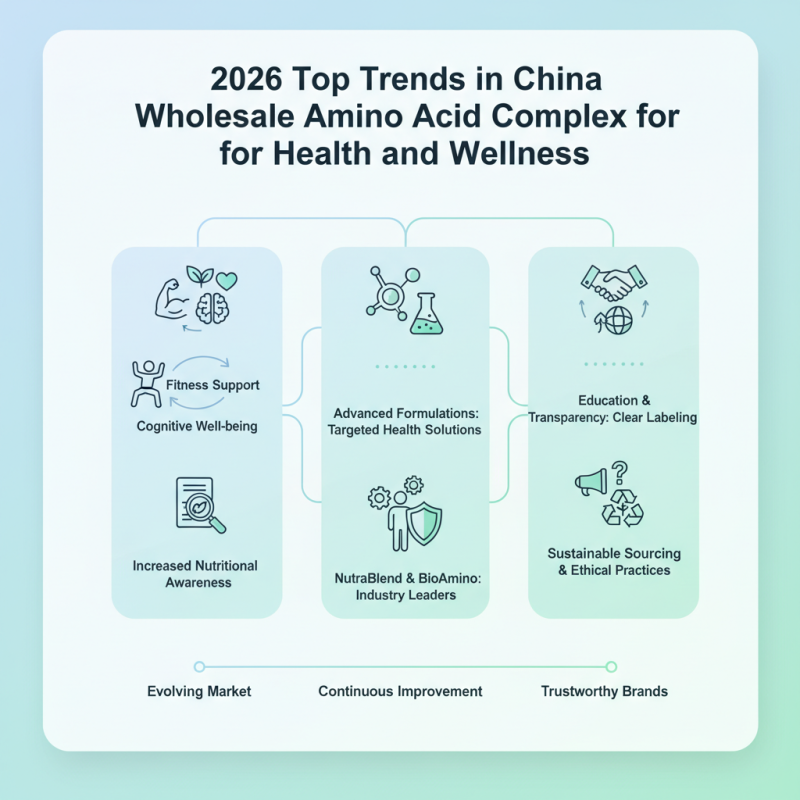
You know, the demand for health and wellness products in China is really on the rise these days. People are becoming way more aware of what they need nutritionally, and it's reflected in what they’re looking for. One product that’s been gaining a lot of attention lately is the Amino Acid Complex. Folks are curious about how it can support their fitness goals and overall health. Companies like NutraBlend and BioAmino are jumping on this trend, offering some pretty innovative blends to meet the needs of health-conscious consumers.
Thanks to advances in research and tech, the formulations for these amino acid products are becoming more precise. They’re not just for athletes anymore— everyday people looking to boost their health are into them too. But here’s the thing—these products can get pretty complicated, and honestly, it can be confusing for consumers trying to figure out which amino acids help with what. That’s why transparency and good education around labeling are so important.
The market for wholesale amino acids is constantly shifting. As new trends come up, brands need to stay flexible and keep refining what they offer. Trustworthiness really matters here—people want brands they can rely on to deliver quality. Looking ahead, it seems like sustainable sourcing and doing business ethically will become even more crucial for shaping the future of the Amino Acid Complex world. All in all, it’s an evolving scene that’s bound to keep changing, but that’s what makes it interesting, right?
Emerging Trends in China's Amino Acid Complex Market for 2026
The amino acid complex market in China is rapidly evolving. As awareness of health and wellness grows, more consumers seek supplements for overall wellbeing. The rise of personalized nutrition is driving demand for tailored
Amino Complex products. People want solutions that address their specific health needs. This trend highlights a shift in consumption patterns, where
customization is key.
Natural and clean-label products gain popularity among consumers. They are increasingly concerned about the ingredients in supplements. As a result, manufacturers are focusing on transparency and high-quality sourcing.
However, quality control remains a challenge in a crowded market. Not all products meet the expected standards, leaving consumers frustrated.
Innovative delivery methods, like flavored powders and ready-to-drink solutions, are also emerging. These options make supplements more appealing, particularly to younger audiences.
The challenge lies in balancing taste and efficacy. Some products may sacrifice one for the other, leading to dissatisfaction. As the market matures, companies must find ways to enhance both aspects.
The future of the amino complex market in China will rely on effective strategies and genuine consumer engagement.
Key Drivers of Growth in Health and Wellness Amino Acids in China
The health and wellness sector in China is rapidly evolving. One of the significant drivers is the growing trend for amino acids.
Gly Amino Acid,
in particular, has caught attention due to its potential benefits in dietary supplements. Consumers are increasingly aware of how amino acids can enhance overall health.
Tips: Consider the nutritional profile of your diet. Incorporating foods rich in Gly Amino Acid may boost your wellness journey.
In addition, the rise of fitness culture in China contributes to this trend. Many people seek supplements to improve performance and recovery. This demand encourages manufacturers to innovate and offer diverse amino acid complexes.
However, not all products deliver on their promises. It’s essential to choose wisely and prioritize quality.
Tips: Always check the ingredient list. Quality control matters, especially for complex amino acid offerings.
Researching reputable sources can help ensure you make informed decisions.
Innovations in Manufacturing Processes for Amino Acid Complexes
The manufacturing of amino acid complexes, particularly Serine Amino Acid, is rapidly evolving. Innovative techniques are emerging to enhance yield and purity, addressing the rising demand for high-quality supplements in health and wellness. Reports by research groups indicate that the global amino acid market is projected to grow at a CAGR of 8% from 2023 to 2028, driven by increased consumer awareness.
New enzymatic and fermentation processes are gaining traction. These methods promise higher efficiency and lower environmental impact. Recent studies show that using specific microorganisms can double the production capacity of serine amino acid. However, this shift requires careful monitoring to ensure consistency and quality. Industry experts caution that scaling these processes may lead to variability if not properly managed.
Quality control remains a challenge amidst these innovations. Manufacturers need to invest in advanced testing methods to verify the potency and safety of their outputs. The demand for transparency in ingredient sourcing is also growing. Companies that embrace these changes may lead the market. Balancing innovation with stringent quality measures is essential for success in this competitive landscape.
2026 Top Trends in China Wholesale Amino Acid Complex for Health and Wellness
| Trend |
Description |
Expected Growth % |
Key Innovations |
Market Drivers |
| Personalized Amino Acids |
Customized blends tailored to individual health needs. |
20% |
AI-driven formulation technology. |
Increased focus on personalized health. |
| Sustainable Sourcing |
Amino acids sourced from environmentally friendly practices. |
15% |
Biotechnology for sustainable production. |
Growing consumer awareness about sustainability. |
| Functional Foods |
Incorporating amino acids into everyday foods. |
25% |
Enhanced solubility and taste masking technologies. |
Healthier eating trends. |
| Advanced Delivery Systems |
Innovative methods for improved absorption. |
18% |
Nano-encapsulation technologies. |
Demand for higher efficacy in supplements. |
| E-commerce Growth |
Increase in online sales of amino acid products. |
30% |
Robo-advisors for personalized buying experiences. |
Shift towards online shopping. |
Consumer Preferences Influencing Amino Acid Complex Products in 2026
The market for amino acid complex products is evolving rapidly in 2026. Consumers are becoming more health-conscious and informed. Many seek natural sources of amino acids for better wellness. This shift is causing manufacturers to rethink their strategies. They need to prioritize clean labels and transparency.
Consumer preferences are shifting towards plant-based options. Many people associate them with better health benefits. There's a growing demand for functional foods that can boost energy and recovery. Moreover, consumers are looking for tailored solutions. They want products that cater to specific health needs, such as muscle recovery or immune support.
Quality remains a critical factor. Shoppers are often skeptical about the sourcing of ingredients. They want to know the origins and the processing methods used. This emphasizes the need for brands to build trust through transparency. However, some companies still struggle with this. They must adapt quickly or risk losing their market share. Failure to meet these preferences indicates a need for reflection and adjustment in product offerings.
Regulatory Changes Impacting the Amino Acid Industry in China
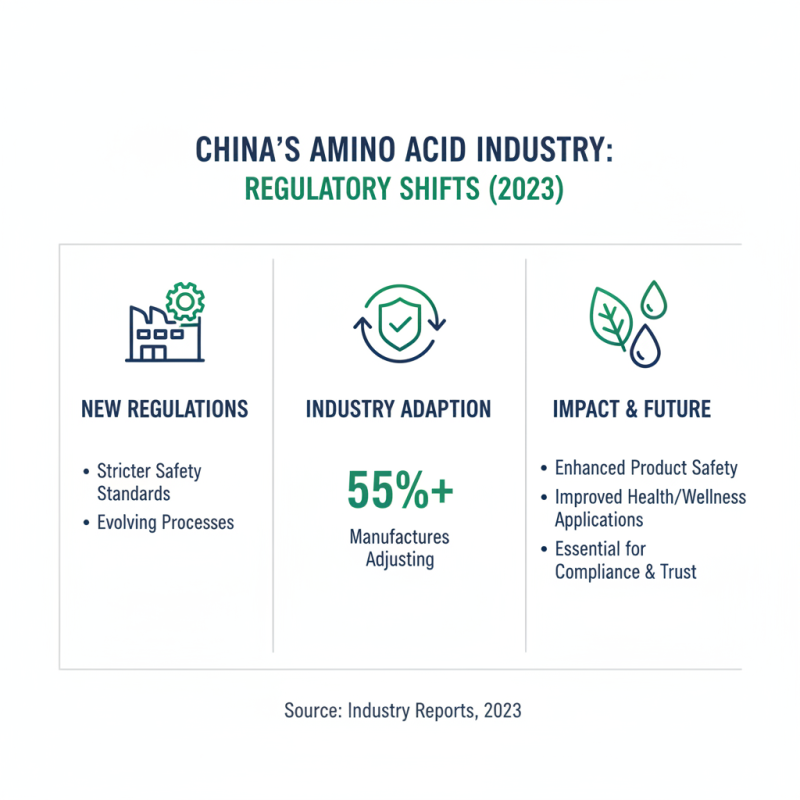
The amino acid industry in China is undergoing significant changes due to evolving regulations. Recent reports indicate that as of 2023, over 55% of manufacturers are adjusting their processes to comply with stricter safety standards. This adaptation is essential, as it ensures products are not only safe but also effective for health and wellness applications.
China's regulatory landscape is increasingly influenced by global health standards. The National Health Commission has introduced new guidelines aimed at improving amino acid quality. A 2022 study showed that these changes could enhance product reliability by up to 40%. However, many companies face challenges with these transitions, struggling to meet compliance deadlines while maintaining production efficiency.
Furthermore, the enforcement of stricter labeling requirements has prompted companies to reassess their marketing strategies. Effective communication about product benefits is crucial. Yet, many manufacturers are still hesitant about adapting their approaches. Failures in this area can lead to misinformation and consumer distrust. As the industry evolves, companies must prioritize transparency and education to navigate these regulatory changes successfully.
Competitive Landscape: Major Players in China's Amino Acid Market
China's amino acid market is rapidly evolving, driven by health and wellness trends. A report from Research and Markets projects the market will reach approximately USD 15 billion by 2026, growing at a CAGR of 7.5% from 2021. The demand for amino acids in dietary supplements and functional foods is a major factor stimulating this growth.
Major players in the industry focus on innovation and quality. They emphasize sourcing raw materials responsibly and ensuring product purity. Data from Grand View Research suggests that the Asia-Pacific region will account for over 40% of global amino acid consumption. Companies are investing in cutting-edge technologies for production processes, which can enhance efficiency and product quality.
Despite the growth, challenges remain. The competitive landscape is fierce, and companies face pressure to maintain compliance with increasingly stringent regulations. Issues related to sourcing sustainable raw materials are also becoming more pronounced. Companies must adapt and innovate. The impact of market fluctuations and evolving consumer preferences presents ongoing hurdles for industry stakeholders.
Future Prospects: Sustainability and Ethical Sourcing in Amino Acids
As the health and wellness sector evolves, sourcing practices are under scrutiny. Sustainability is no longer a trend; it's a necessity. Consumers want assurance that their health products are ethically sourced. The amino acid complex market, particularly for health supplements, faces this challenge head-on. Sourcing transparency and eco-friendly practices will shape the future of this industry.
Incorporating Leucine Amino Acid into formulations highlights a growing trend. This essential amino acid supports muscle recovery and growth. However, producers must consider origin. Sourcing Leucine responsibly can minimize environmental impact and improve community welfare. Ethical practices may cost more initially, but they are vital for long-term success.
Many companies still struggle with these concepts. Unsustainable practices persist, leading to potential backlash from informed consumers. It raises questions about accountability and commitment within the industry. Companies are being urged to adopt better practices. Investing in sustainable sourcing for amino acids can lead to legitimacy and trust. The journey toward comprehensive ethical sourcing is complex and ongoing.
Essential Insights on High Purity L-Serine Amino Acid Powder for Nutraceutical and Pharmaceutical Applications
L-Serine, a high purity amino acid, plays a crucial role in various biological functions and is increasingly recognized for its applications in nutraceutical and pharmaceutical sectors. This essential amino acid supports metabolic processes and serves as a building block for proteins, making it integral to the development of nutritional supplements. Its premium quality and high purity make it particularly desirable for manufacturers seeking to enhance their product offerings with effective and reliable ingredients.
Sourced from reputable suppliers, L-Serine is a versatile amino acid that meets stringent purity standards, ensuring it caters to the demands of both the food industry and the burgeoning nutraceutical market. With its efficacy supported by research, this amino acid finds its place in formulations aimed at improving cognitive function, muscle recovery, and overall health. As companies increasingly focus on product quality and ingredient transparency, incorporating high purity L-Serine in formulations can significantly contribute to consumer satisfaction and wellness outcomes.
FAQS
: New enzymatic and fermentation methods are enhancing yield and purity. These methods promise efficiency and lower environmental impact.
Specific microorganisms can double serine amino acid production. However, consistency must be monitored closely.
Quality control is a significant challenge. Advanced testing methods are needed to ensure potency and safety.
Consumers want natural sources and clean labels. They prioritize transparency in ingredient sourcing and processing.
Many associate plant-based options with better health benefits. This shift influences manufacturers to adapt their strategies.
They seek products that cater to specific health needs, like muscle recovery or immune support.
Quality remains critical. Shoppers are skeptical about ingredient sourcing and want detailed information.
Transparency in ingredient sourcing and processing can help build trust. Some still struggle with this, indicating room for improvement.
Failure to meet consumer preferences may lead to loss of market share. Reflection on product offerings is necessary.
Balancing innovation with stringent quality measures is essential for success in this evolving market.
Conclusion
The article explores the emerging trends in China's Amino Acid Complex market as we approach 2026, highlighting key drivers such as the growing demand for health and wellness products. Innovations in manufacturing processes are enabling the production of high-quality Amino Acid Complexes, while shifts in consumer preferences are pushing for more personalized and functional formulations.
Additionally, regulatory changes are shaping the industry's landscape, ensuring safety and quality in amino acid products. The competitive environment is marked by major players striving to adapt to these trends, focusing on sustainability and ethical sourcing. This future-oriented approach not only addresses consumer demand but also aligns with global shifts towards responsible consumption, positioning the Amino Acid Complex as a vital component of health and wellness in the coming years.